


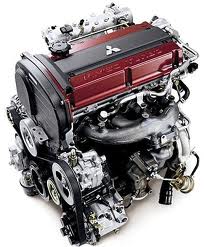
Japanese Auto Manufactures are known for building reliable vehicles. A very large part of those vehicles are the motors that power them. These engines are small, lightweight, and produce a great amount of power for their size. Many of the power plants found in the creations of Japanese Auto Markers have gained cult followings of their own. When a motor is good enough to pull out of its original home and be put into a another type or model of car then you know it has to be good. Here is a list compiling 10 of the best motors to come out of Japan so far. The list is in no particular order.
10. Honda B-Series

This motor stepped Honda into the spotlight. Dual overhead cams, variable valve timing and amazing fuel economy pushed the Honda ahead of other Japanese auto makers. The motor first appeared on the market in 1989. Several different engine codes were built including the B16, B17, B18, and B20. The B16 and B18 motors were and still are the most popular and famous. Honda placed these engines in the Civic and Integra as performance options over the older Honda D series motors. The B series family produced anywhere from 137 horsepower to 200 horsepower. These motors ceased production in 2001 and were replaced by the Honda K series engine. Even though the B series is dead to Honda MFG it still lives on and is one of the most popular racing and enthusiast engines on the planet today.
9. Mitsubishi 4G63

The Mitsubishi 4G63 motor was the workhorse of many Mitsubishi vehicles. Originally produced in both Single and Dual Overhead Cams variations. The Dual Overhead option is the most notable and popular of the two. The 4G63 turbo model was first offered in the Galant VR-4 in Japan. When the motor made it to American we saw it in the first generation of the Eclipse and its sisters, the Eagle Talon and Plymouth Laser. This variant saw a Turbo charged DOHC design that ponied up close to 200 horsepower in stock form. The 4G was also used in many of Mitsubishi’s Lancer and Lancer Evolution platforms. These variations netted the driver with anywhere from 200 to 300 horsepower. One of the motors lesser know platforms was in the 1998 to 2005 Hyundai Sonata. The last offering from the 4G63 was used on the Lancer Evolution 9. This saw the motor being paired with Mitsubishi’s variable valve timing system, MIVEC, two piece piston rings and a larger turbocharger. The 4G63 isn’t dead yet though. Chinese Auto Maker Landwind is using them in their 2015 X7.
8. Nissan VR38DETT

Nissan of Japan’s latest and greatest. This 3.8 liter, 24 valved, twin turbo V-6 motor weighs in at just over 600 pounds. It boasts variable valve timing and feedback control system that changes air to fuel ration depending on engine load. Compression ration is 9.0:1 and features four cams held in overhead fashion. This motor is currently only found in the Nissan GT-R or the limited edition Juke R, when it leaves the clean room it is assembled in. Power rating depends on the year of the GTR. Power levels are 480, 550, and 600 horsepower. This is what the new face of supercar motors looks like.
7. Mazda 13B-REW

It’s Wankle Time! Mazda used the 13B-REW motor in the RX7 that was found in Japan and the United States. The tiny 1.3 liter rotary engine was nothing to laugh at by any means. The REW variation meant the engine was twin turbo charged and produced anywhere from 255 to 280 horsepower. The turbos were ran sequentially with the first turbo building boost around 4800 rpms and the second picking up after that. The 13B-REW was the world’s first production sequential turbo charged motor. This lightweight motor was used until 1995 in the US and until 2002 in Japan. It is still a heavy hitter today with a huge cult following. The motor is swapped frequently and can be found in various VWs. The 13B-REW is one of the most popular, if not the most popular, motor in the Puerto Rican drag racing scene.
6. Nissan SR20DET

This Nissan motor has one of the World’s largest followings to date. The SR20DET is part of the Nissan SR motor family and could be found in the Nissan Bluebird, Silvia, Pulsar Gti-R and many other Nissans. The Silvia is the most notable of them all. The motor has a 2.0 liter displacement containing a dual overhead cam design, electronic fuel injection and a turbo charger. Sounds like the best mix of automobile motor design. This motor replaced the CA18DE and CA18DET models. Power levels from 201 to 250 horsepower were found depending on the model the car was going into. The US never saw the SR20DET motor. The KA24 Single and Dual overhead cam motors were used in the Nissan 240SX. The SR20 is widely imported to the US from Japan today and can be found in many different rear wheel drive platforms including the 240SX.
5. Honda K Series

The Honda K Series engine replaced the B series. The K series brought larger displacements and more power. Intelligent Variable Valve Timing, IVTEC, helped these motors rev to higher numbers and get better fuel economy than its predecessors. It also allowed Honda to use one motor in more of its vehicles than ever before. The K series is used in the CDX, RSX, RDX, TSX, Civic, Accord, Odyssey and other models. This opened the K series engine up to a wider range of uses and power levels. The 2.4 liter K motor found in the Honda CRV has been a choice favorite of import drag racers for a while now. The new turbo charged K series equipped Honda Civic will take things to a whole other level. The K series saw power ranges from 140 to 300 horsepower. Not too bad for a little four banger.
4. Toyota 2JZ-GTE

The Toyota motor that was ahead of its time. This 3.0 inline six cylinder twin turbo charged motor was, and still is, a monster. The motor first saw the light of day in the Toyota Aristo V in 1991. Then it went on to power one of Japan’s most successful cars to date, the MkIV Toyota Supra. The Japanese motor produced 276 horsepower while the US variant produced 321 horsepower. This motor made power all the way through the rpms. It is still used widely today in many variants. Die hard Supra followers easily make over 1,000 horsepower on modified motors and other tuners swap the 2JZ-GTE into all sorts of rear wheel drive platforms to this day. With the new interest in the VVTi, variable valve timing, version of the 2JZ-GTE this Japanese great will not be forgotten any time soon.
3. Nissan RB26DETT

The Nissan RB26DETT was produced for the 1989 to 2002 Nissan GT-Rs. The 2.6 liter inline six was a twin turbo charged beast that featured an iron block and an aluminum head. The head contained four valves per cylinder paired with dual over head cams. Intake air is managed by six individual throttle bodies. The twin turbo setup is parallel instead of sequential with twin T28 turbos. This combination ushered in 276 horsepower at ten pounds of boost. This motor found its way into the R32, R33, and the R34. All three of which are considered to be kings of the race track. This motor sparked Toyota to step up their game with the 2JZ-GTE as well. the RB26DETT swap is huge with all sorts of racers and tuners…if they can afford it. Greatness comes with a price.
2. Toyota 4A-GE

The Toyota 4A-GE was the little motor that could. Part of Toyota’s vast A-series motor line up the 4A-GE featured 16 valves and a twin cam setup. The motor first entered production in 1983 and finished in 1991. The 4A-GE produced only 128 horsepower but it was perfect for the lightweight Toyotas it called home. The 4A-GE was found in the first generation MR2 and the car that started the drifting world, the AE86 Sprinter Trueno and the AE86 Corolla Levin. This motor is still widely used today in stock and modified forms. Many consider it to be the last of the old school Japanese performance motors.
1. Subaru EJ20

The Subaru EJ20 was a 2.0 liter boxer motor that featured a single or twin cam setup, It was also offered naturally aspirated or turbocharged. The king of the two was the EJ20T. This innovative motor was found in the Legacy, WRX, and WRX STi. The motor was known for being able to handle almost anything you could throw at it. It was a contender on the WRC rally circuit as well. It gave the Mitsubishi 4G63 powered Lancer Evolutions a run for their money. The EJ20 was also the basis for the larger EJ class motors that Subaru still runs today.
Link


 පිට රටවල එකෙක්ටවත් ඒව මතක නෑ..


