පුදුම ආහාර වට්ටෝරු

vidura99

Well-known member
  • Oct 16, 2009
    14,322
    1,367
    113
    Colombo
    පුදුම_ආහාර_වට්ටෝරු

    අප ආහාර ගන්නේ ජීවත් වීම පිණිසය. එහෙත් තවත් බොහෝ දෙනා ආහාර ගැනීම පිණිසම ජීවත් වෙති. ඒ කෙසේ වුවද මිනිසාගේ ආහාර පුරුදු එකිනෙකට වෙනස්ය. ඇතැම් ආහාර වට්ටෝරු පුදුම උපදවන සුළුය. අන්තර්ජාලයේ එක් වෙබ් අඩවියක් පසුගියදා සමස්ත මිනිස් වර්ගයාගේ සියලුම ආහාර වට්ටෝරු අතරින් වෙනස් මෙන්ම ඇදහිය නොහැකි, විකාර රූපී ආහාර වට්ටෝරු දහය නම් කළේය. මේ අරුම පුදුම ආහාර වට්ටෝරු විමසීමේදී විස්මය ද ඇතැම් විට පිළිකුළ ද ඔබ තුළ ජනිත වනු නොඅනුමානය.

    Every culture has their own traditional foods and methods of preparation, but what seems mouth-watering to some can be utterly vomit-inducing to others. While I travelled India for a month this summer, I remember talking with some locals about foods and recipes they liked and disliked, asking them if there were any particular Western dishes they found totally disgusting.

    No 1.

    birds_nest_soup.jpg


    The initial image that popped into my head upon hearing the name of this renowned Chinese dish, was a soup comprised of floating, miscarried birds and remnants of twigs. However, it seems that a few species of swallow, namely swiflets, are known for building saliva nests, saliva which apparently produces a unique texture for soup that is simply… mouth-watering. The nests have been a traditional part of Chinese cooking for over 400 years and are among the most expensive animal products consumed by humans. In Hong Kong, a bowl of Bird Nest Soup could cost anywhere from $30 USD to $100 USD.
    Preparation: There are two types of bird nests available: clean or unclean. Clean nests should be soaked in cold water for about 3 hours until soft, then cleaned under cold water. Unclean nests are blackish and still contain feathers and twigs so you will have to soak them for at least a day, that way, they will expand, loosening any foreign matter which will then float to the top. Rinse off the nests under running water until nothing comes loose. Whatever stubborn impurities remain will have to be handpicked using a pair of tweezers. Once this is done, you can add the softened nest pieces into your favourite chicken soup recipe. Mmmmm… Bird nest…

    අරුම පුදුම ආහාර වට්ටෝරු අතර මුල් තැන ලබා සිටින්නේ චීනයේ සුපයකි. එහි පුදුමය එය සාදන්නේ කුරුළු විශේෂයක කුඩු තැම්බීමෙන් බවයි. මේ කුරුළු විශේෂය කූඩු සැදීමට ගන්නා ද්‍රව්‍ය මෙන්ම එම ද්‍රව්‍ය එකිනෙක ඇලවීමට යොදා ගන්නා කිසියම් මැලියම් වැනි ද්‍රව්‍යයක් හේතුවෙන් මේ කූඩු තම්බා ගත් වතුර ඉමිහිර රස වන බව චීන ජාතිකයන් ගේ අදහසයි. මේ කුරුළු කූඩු සඳහා වන ඉල්ලුම කොතරම් වන්නේ ද යත් ඒවා කිලෝ එකක මිල ඩොලර් 10,000 ක් පමණ වේ.


    malay.birds-nests-vendor0908afp275.jpg


    images
     
    Last edited:

    vidura99

    Well-known member
  • Oct 16, 2009
    14,322
    1,367
    113
    Colombo
    No 2

    මේ පුදුම ආහාර වට්ටෝරු අතර දෙවැනි තැන කාම්බෝජයේ බදින ලද දිවි මකුළුවන්ට හිමි වී ඇත. දිවි මකුළු විශේෂයක් වන විශාල කළු මකුළුවෝ රසවත් ආහාරයක් බව ඇසීමට ඔබගේ පිළිකුලට හේතු වනු ඇත. එහෙත් කාම්බෝජයේදී නම් ඔවුන් ඉතාමත් රසවත් ආහාරයක් වේ. මේ මකුළු විශේෂය අල්ලා කිසිඳු කොටසක් ඉවත් නොකර සම්පූර්ණ තෙලේ බැද ගැනීමෙන් ආහාරය සකස් කර ගනු ලැබේ. ඔවුන්ව ආහාර ලෙස ගත හැකි බව මුල් වරට සොයා ගන්නා ලද්දේ කෙමර්රූජ් පාලන සමයේ අධික කුසගින්නේ සිටි කාම්බෝජ ජනතාව විසිනි. එහෙත් අද එය එරට අතිශයින් ජනපි‍්‍රය කෑමක් බවට පත් ව තිබේ.

    fried-yummy-tarantula.jpg


    It seems one person’s nightmare is another’s regional delicacy. In the Cambodian town of Sukon, fried tarantulas are a very popular and seemingly tasty snack, which have come to pique the curiosity of many tourist taste buds from all over the world. The spider-frying tradition came in response to the starving population’s need for food during the years of the Khmer Rouge rule. The spiders are bred in holes in the ground in villages north of Skuon and then fried in oil; legs, fangs and all. The tarantulas are said to have a crispy exterior and a soft, sometimes runny interior.
    Preparation: Toss spiders into a mixture of MSG, sugar and salt. Crush garlic and fry in oil. Add spiders to the fried garlic oil and wait until the legs are almost completely stiff, so that the contents of the abdomen are not too runny.
     

    vidura99

    Well-known member
  • Oct 16, 2009
    14,322
    1,367
    113
    Colombo
    No 3

    images


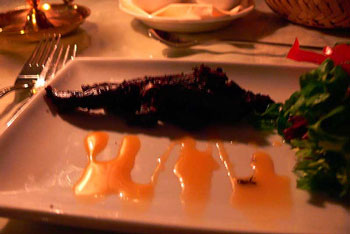
    ජපානයේ ජනතාව ද ලොවම පුදුම කරන ආහාර වට්ටෝරු අතරට තම දේශයට ම සුවිශේෂී ආහාර වර්ගයක් එක් කිරීමට සමත් වී තිබේ. එය නම් පෆර් නම් වන මත්ස්‍යයාගෙන් සාදන ආහාරයකි. මේ පෆර් මත්සයා උග්‍ර විෂ සහිත මත්සයෙකි. උගේ විෂ කොතරම් ද කිව හොත් එය සයනයිඩ් වලට වඩා 1250 ගුණයකින් ප්‍රබල බව සොයාගෙන තිබේ.

    එසේ වුවද මෙතරම් විෂ මත්සයා යොදා ගෙන ආහාර තැනීමට ජපන් ජාතිකයෝ ක්‍රියා කරති. මේ මත්සයා ආහාරය පිණිස සකස් කිරීමට අවසර ඇත්තේ විශේෂ බලපත්‍රයක් සහිත සුපවේදීන්ට පමණය. සකස් කිරීමෙන් පසු ෆෝගු යනුවෙන් හඳුන්වන මේ මත්සය විශේෂය ආහාරයට ගෙන 15 දෙනෙක් පමණ මිය ගොස් තිබේ. එසේ වුවද ෆෝගු තවමත් ජපානයේ ජනපි‍්‍රය කෑමකි.

    Is the evil blowfish - also known as puffer, globefish, or swellfish - in danger of extinction? In Japan, eating the honorable fugu (blowfish) is the ideal of gourmet dining-and the cooking version of Russian roulette. According to Japan Economic newswire, a Japanese wholesaler exported the first 90 kg of vacuum-packed fugu to Hong Kong in October 1995. Hong Kong is the second market to import fugu from Japan. New York, which started importing the fish in 1989, currently sells about 1 tons of fugu every year, according to the wholesaler. Fugu's trade volume is rising because of people's curiosity in eating such fish.

    In Japanese, the word fugu is a general name for fish of the family Tetraodontidae, class Osteichthyes, order Tetraodontiformes, but it is also used more broadly, like the English word globefish, to indicate other fish which can swell their bellies or have a solid square shape. It is also used more narrowly as the name of the genus Fugu of the family Tdtraodontidae living only in waters surrounding Japan and the rivers emptying into them. Several species including the torafugu (fugu rubripes) are used for food.

    images
     
    Last edited:
    • Like
    Reactions: thilina91

    vidura99

    Well-known member
  • Oct 16, 2009
    14,322
    1,367
    113
    Colombo
    No 04

    පිලිපීනයේ බලුට් නම් වන ආහාරය ද ඔබ තුළ මිශ්‍ර සිතිවිලි දනවනු ඇත. මේ සඳහා යොදාගන්නේ සංසේචනය වූ කළලයක් සහිත කුකුළු හෝ තාරා බිත්තරයි. මේ බිත්තරය ඔබට කැමැති අයුරකට සකස් කර ගත හැකිය. එසේ කළ පසුව ඔබට බිත්තර සුදු මදය ද කුකුළු හෝ තාරා පැටියකු ද එක විට ආහාරයට ගැනීමට ලැබෙනු ඇත. අපේ රටේ මෙන් සත්ත්ව අවිහිංසාව ගැන හැඟීමක් නොමැති මේ රටවල ජනතාවට බලුට් යනු අති ජනපි‍්‍රය ආහාරයකි.


    balut.jpg


    vidura99

    Well-known member
  • Oct 16, 2009
    14,322
    1,367
    113
    Colombo


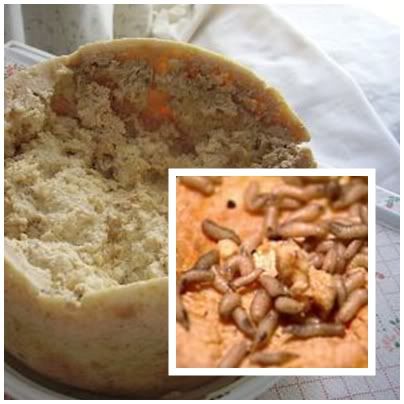
    ඉතාලියේ සාර්ඩිනියා ප්‍රදේශයේ ජනතාව අපූරු චීස් වර්ගයක් මේ ආහාර අතරට එක් කර තිබේ. එය හඳුන්වන්නේ කාසු මාසු යන නමිනි. මේ සඳහා යොදා ගන්නා මූලික අමුද්‍රව්‍ය වන්නේ බැටළු කිරි ය. බැටළු කිරි හොඳින් මුදවා පැසී ගෙන එන විට එය මැස්සන්ට හොඳින් විවෘත කර තබනු ලැබේ. එවිට මැස්සෝ මේ චීස් මත හොඳ හැටි බිත්තර දමති. මැසි බිත්තර පිළවුන් බවට පත්වූ පසු මේ චීස් ආහාරයට සුදුසු සේ සැලකේ. ආහාරයට ගැනීමේදී පිළවුන් ඉවත් නොකරන අතර ඔවුන් පන පිටින් සිටියදීම චීස් කෑමට ගත යුතුය. නූතනයේදී මේ චීස් වර්ගය සෞඛ්‍යයට අහිතකර වේ යැයි තහනම් කර තිබුණ ද ඉතාලියේ කළු කඩවලින් මේවා ඕනෑතරමක් මිලදී ගත හැකිය.

    images


    6317c872.jpg


    Casu marzu (also called casu modde, casu cundhídu in Sardinian dialects, or in Italian formaggio marcio) is a traditional Sardinian sheep milk cheese, notable for being riddled with live insect larvae. It is found mainly in Sardinia, Italy. Casu marzu literally means "rotten cheese" in Sardinian, and the cheese is known colloquially as maggot cheese.
    Derived from Pecorino, Casu marzu goes beyond typical fermentation to a stage most would consider decomposition, brought about by the digestive action of the larvae of the cheese fly Piophila casei. These larvae are deliberately introduced to the cheese, promoting an advanced level of fermentation and breaking down of the cheese's fats. The texture of the cheese becomes very soft, with some liquid (called lagrima, from the Sardinian for "tears") seeping out. The larvae themselves appear as translucent white worms, about 8 millimetres (0.3 in) long.[1] When disturbed, the larvae can launch themselves for distances up to 15 centimetres (6 in). Some people clear the larvae from the cheese before consuming; others do not.

    19692.jpg
     

    vidura99

    Well-known member
  • Oct 16, 2009
    14,322
    1,367
    113
    Colombo
    ස්වීඩනයේ සර්ස්ට්‍රොමිං නම් වන ටින් කරන ලද ආහාරය අරුම පුදුම ආහාර වේල් අතර හය වන තැන දිනාගෙන සිටියි. මෙහිදී බිත්තර දැමීමට ආසන්න හෙරිං මසුන් අල්ලා මාස දෙකක පමණ කාලයක් ඔවුන් නරක් වීමට බුජම්වල බහා තබනු ලැබේ. ඉන්පසු මේ මාළු ගෙන ටින්වල අසුරා වෙළෙද පොළට යවනු ලැබේ. බැලු බැල්මට ඒවා සැමන් ටින් මෙන් දිස් වේ. එහෙත් මේ ටින් විවෘත කළ විට නහය හකුළුවන ගඳක් විහිද යයි. එසේ වුවද ස්වීඩන ජනතාව සර්ස්ට්‍රොමිං නම් වන මේ කුණු මාළු සමඟ කර කරන ලද පාන් සහ තම්බන ලද අල ද ආහාරයට ගනිති.


    surstromming.jpg


    Caught in the months of May and June, processors immerse the fish for a day in brine and then decapitate and clean it. Next they stack it in barrels, trundling it out into the summer sun and left there for 24 hours to get the fermenting process started. An inch or two of space is left at the top of each barrel so that any gas formed during the fermentation can accumulate with out causing an explosion.

    Put into a cool storage room, the herring ferment at a slower rate. As they do, their aroma grows progressively stronger, and only the most acute nose can determine the precise point at which they are ready for canning.

    Among those who like surstromming best, and its fans are many, there's the belief that the contents of a can left for a year at a temperature of 68̊ F. actually improve; the can will have begun to swell, and at its puffiest must be opened gingerly, like a bottle of champagne.

    Swedes eat ripe surstromming with paper-thin hard bread and boiled potatoes, usually an almond-shaped variety that comes from the north. It has a sharp, cutting taste. Sometimes, they drink milk with it, but beer and aquavit more often accompany the dish. Some Swedes down it without a second thought to its smell; others, in order to partake of it at all, first have to rinse it in purifying soda water.

    Sales of surstromming are on the increase in Sweden, but its future as an export item is, predictably, dim. Although 800 cans of it used to be exported annually to Hollywood when a Swedish movie colony could still be found there, U.S. customs officials have since come to view it with suspicion, despite its proven nontoxicity. Moreover, the product doesn’t always travel well. Only recently a Swede found this out. Thinking to amaze an important New York client and the assembled board of directors with so bizarre a food, he produced the swollen can he had carried all the way from Sweden in his luggage and dramatically laid it on the table. At that moment, the can exploded.
     

    vidura99

    Well-known member
  • Oct 16, 2009
    14,322
    1,367
    113
    Colombo
    පණ පිටින් සතකු ආහාරයට ගන්නවා යැයි ඇසීම ඔබේ දෑසට කඳුළු නැංවීමට සමත් වනු ඇත. සත්ත්ව අවිහිංසාව සමඟ කොතෙක් නොපෑහුණ ද කොරියාවේ ජනතාව පණ පිටින් සිටින බූවල්ලෝ ආහාරයට ගනිති. බූවල්ලන් අල්ලා ගත් සැණින් ඔවුන් පිරිසිදු කර අඩු පඬු සිඳ දමනු ලැබේ. මේ අඩු එවලේම සෙසම් තෙල්වල හොඳින් ගිල්වා පිඟන්වල තබා පිළිගන්වනු ලැබේ.

    පිළිගන්වන මොහොතේදීත් බූවලු අඩු පණ පිටින් තිබීම කෝකියාගේ දක්ෂකමකි. එමෙන්ම මේ ආහාරයට මුවට ගැනීමට කායික සහ මානසික ශක්තියක් තිබිය යුතු බව බොහෝ දෙනාගේ අදහසයි. මානසික ශක්තියක් අවශ්‍ය ඇයි දැයි ඔබට සිතා ගත හැකි වනු ඇත. කායික ශක්තිය අවශ්‍ය වන්නේ බූවලු අඩු පිඟානෙන් ඉවතට පැනීම වැළැක්වීමට හෝ දත් හෝ දිව ග්‍රහණය කර ගනු වැළැක්වීමටය


    Eating live octopus, or sannakji in South Korea is seen as a novelty and health dish (whatever happened to eating fruit and vegetables?!). The live baby octopus is cut up and immediately served, usually with some sesame oil. The problem is the tentacles are still squirming and fighting--which equates to a party in your mouth as your chew them to death inside your mouth!


    vidura99

    Well-known member
  • Oct 16, 2009
    14,322
    1,367
    113
    Colombo
    ඉන්දුනීසියාවේ කෝපි ලුවාක් ද එබඳු ම පුදුම හිතෙන පානයකි. ලුවාක් යනු එරට ජීවත්වන බළලකු වැනි සතෙකි. උන් ආහාරයට ගන්නේ හොඳින් පැසුණු කෝපි ඇට පමණි. එහෙත් ඒවා දිරවීමට ඔවුන්ට නොහැකිය. ඉතින් ආහාරයට ගත් කෝපි ඇට මේ සතුන්ගේ වසුරු සමඟ නික්මේ. එවිට ඉන්දුනීසියානු ජනතාව ඒවා අහුලා ගනිති. වසුරු සමඟ නික්මෙන කෝපි ඇට වඩා සුවඳවත් සහ රසවත් බව ඉන්දුනීසියානු ජනතාවගේ අදහසයි. මේ සඳහා වන ඉල්ලුම කොතෙක් ද යත් මේ කෝපි ඇට රාත්තලක් ඩොලර් 120 - 300 ත් අතර වේ.

    palm-civet_ltn-259x300.jpg


    kopi_luwak.jpg


    For those of you who like cute things, FEAR NOT, no Luwaks were hurt in the process of making Kopi Luwak. In fact, these little creatures are renowned for their delicious poop which makes for the world’s rarest and most expensive coffee beans at a pricy $100-$600 USD per pound. The Luwak’s diet consists of only the ripest coffee cherries, however because they don’t digest the beans, the beans come out perfectly whole. The fermentation process in the stomach results in a unique, delicious aroma once excreted.
    Preparation: Once the Luwak has shat, wash the beans. With the beans in hand, think about where they came from and wash them again. Then, lightly roast the beans, but only lightly, so as to not destroy the complex flavors that develop through the process. :D:yes::yes:


    :P:P:P:P
     
    • Like
    Reactions: rskkelum

    vidura99

    Well-known member
  • Oct 16, 2009
    14,322
    1,367
    113
    Colombo
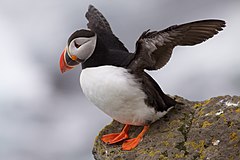
    අයිස්ලන්තයේ මුහුදු වෙරළ ආශි‍්‍රතව ජීවත් වන පෆින් කුරුල්ලාගේ හදවත යොදා ගැනීමෙන් සාදන ආහාරයට අරුම පුදුම කෑමවල නම වැනි ස්ථානය හිමි වී තිබේ. මේ කුරුල්ලා මරණයට පත් කර උගේ හදවත කිසිඳු පිසීමකට ලක් නොකර ආහාරයට ගැනීමට අයිස්ලන්ත ජනතාව දක්වන්නේ පුදුම උපදවන රුචිකත්වයකි
    Puffin.jpg

    240px-Puffin_Latrabjarg_Iceland.jpg


    Sometimes referred to as the ‘clown of the ocean’ or ‘sea parrot’, the puffin, with its colourful beak and clumsy behaviour, is considered an adorable bird. The sight of a puffin flapping its wings and jumping from a cliff to generate enough lift to become airborne is enough to make anyone go ‘aaaah’.

    In Iceland, however, these seabirds have been a source of sustenance for Icelanders on the islands for centuries. Iceland is home to one of the world’s largest colonies of puffins and ‘sky fishing’ is a sport which involves catching the low flying birds in a big net.

    The best place to catch a puffin or two is in the Westman Islands, where they are sustainably harvested to prevent them from coming extinct. The heart of a puffin is eaten raw whilst it is still warm in traditional Icelandic delicacy.

    Puffins are eaten by breaking their necks, skinning them and then eating the fresh heart raw. Puffin is supposed to be delicious like a fishier version of chicken or duck. It is often smoked, grilled or pan-fried. TV chef Gordon Ramsey caused quite a stir when he was seen eating this rare delicacy on TV.

     
    Last edited:

    vidura99

    Well-known member
  • Oct 16, 2009
    14,322
    1,367
    113
    Colombo
    10 – Snake Wine, Vietnam

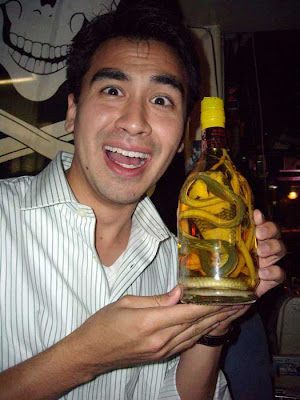
    මේ ලැයිස්තුවේ දහවන තැන වියට්නාමයේ නයි වයින් දිනාගෙන ඇත. මෙහිදී සහල්වලින් සාදන ලද වයින් බෝතලයකට විසඝෝර නයෙකු ඇතුළත් කරනු ලැබේ. මෙහිදී සර්පයාගේ විස වයින්වලට උරා ගනී. එහෙත් වයින්වල ඇති එතනෝල් විෂ අක්‍රිය කරයි.

    මේ පානය සෞඛ්‍යයට බෙහෙවින් හිතකර යැයි පැවසුව ද අද වන විට නයි වයින් පානයට නොව ප්‍රදර්ශනයට බෙහෙවින් භාවිත කෙරේ

    snake-wine-16.jpg


    Fancy some wine with a difference? A bouquet of snake with some snake blood notes perhaps? Snake wine is a bottle of rice wine with a venomous snake inside and has ‘medicinal purposes’, but is probably more useful for display purposes than to drink.

    The snake is left to steep in the rice wine for many months to let the poison dissolve in the wine. The ethanol makes the venom inactive so it is not dangerous, and snake wine supposedly has many health benefits. It has a slightly pink colour like a nice rose because of the snake blood in there.

    It originated in Vietnam, where snakes are thought to possess medicinal qualities, but it has spread to other parts of South East Asia and Southern China. Snake blood wine on the other hand is made by slicing the belly of the snake to let the blood drain into the wine and this is served immediately.


    vidura99

    Well-known member
  • Oct 16, 2009
    14,322
    1,367
    113
    Colombo
    Little_Gators.jpg


    11.Gator Kebabs – South Louisiana

    Mostly served at outdoor festivals, chunks of deep-fried alligator are served on 10-inch wooden skewers. This rare delicacy is said to have a chewy consistency, something to the effect of undercooked pork. Yummy?
    Preparation: For the freshest of fresh gator kebabs, find a hunter with a permit to shoot alligators. Cut up the alligator’s tail into bite-sized pieces. Batter your gator in cornmeal seasoning. Skewer, throw on the barbecue and serve.