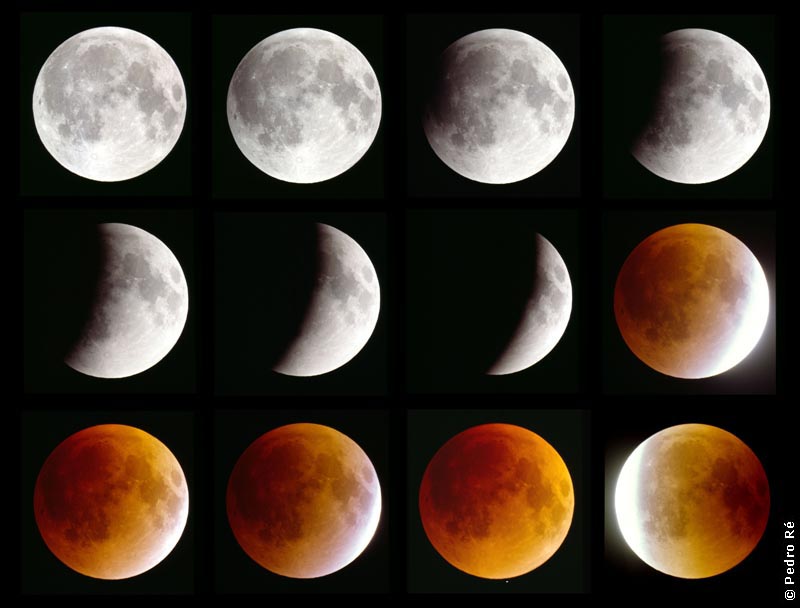
A partial lunar eclipse will take place on August 16, 2008, the second of two lunar eclipses in 2008. Most of Europe and Africa will see the entire eclipse. All of South America and Australia will be able to see part of it.

The partial eclipse is the second of the two lunar eclipses in 2008, with the first being a total eclipse on February 20, 2008. The next lunar eclipse will be a penumbral eclipse occurring on February 9, 2009, while the next total lunar eclipse will occur on December 21, 2010.

The partial eclipse will be completely visible from Africa and Europe. Parts of Australia will see it begin before sunrise, while parts of South America will see it end just after sunset.
The penumbral eclipse will begin at 18:23 UTC, with the partial eclipse beginning at 19:36. The time of greatest eclipse is 21:10. The partial eclipse will end at 22:44, and the penumbral eclipse will finally at 23:57.
The planet Neptune will be 2 days past opposition, visible in binoculars as an 8th magnitude "star" just two degrees west and slightly south of the moon.
Relation to other lunar eclipses
The eclipse belongs to Saros series 138, and is the 29th of 83 lunar eclipses in the series. The first penumbral eclipse of saros cycle 138 began on October 5, 1503, first partial eclipse on June 13, 1900, and total first will be on September 7, 2044. The last total eclipse will occur on June 8, 2495, last partial on August 13, 2603, and last penumbral eclipse on March 30, 2982
Lunar year and Metonic cycles (354 days and 19 years)
This eclipse is the one of four or five lunar eclipses in two short-lived parallel series:
* The lunar year series repeats after 12 lunations or 354 days (Shifting back about 10 days in sequential years). Because of the date shift, the earth's shadow will be about 11 degrees west in sequential events.
* The Metonic cycle repeats nearly exactly every 19 years and represents a Saros cycle plus one lunar year. Because it occurs on the same calendar date, the earth's shadow will in nearly the same location relative to the background stars.
Lunar years (12 lunations, 354 days) Metonic cycles (19 years)
1. September 7, 2006 - partial (Saros 118)
2. August 28, 2007 - total (Saros 128)
3. August 16, 2008 - partial (Saros 138)
4. August 6, 2009 - penumbral (Saros 148)

Note: Lunar Saros series 108 ended on August 27, 1969.
1. August 17, 1951 - penumbral (Saros 108) [2]
2. August 17, 1970 - partial (Saros 118) [3]
3. August 17, 1989 - total (Saros 128) [4]
4. August 16, 2008 - partial (Saros 138)[5]
5. August 17, 2027 - penumbral (Saros 148) [6]

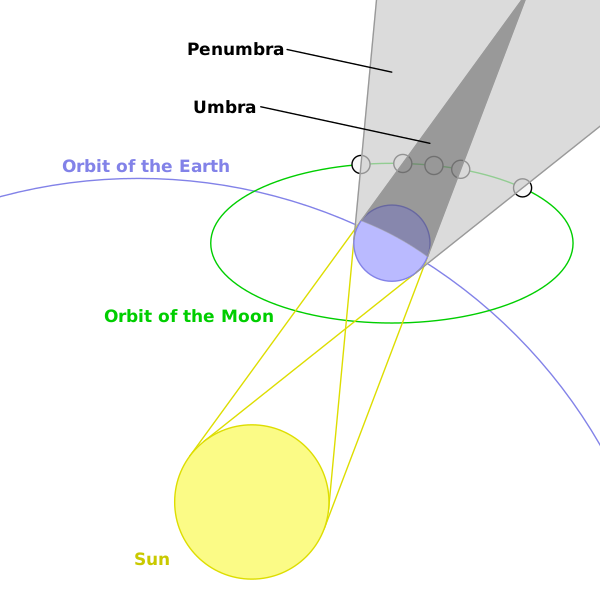
These charts show the moon's path through the earth's shadow near its ascending node. The path progresses northward through each sequential eclipse. Only the 2007 event is total.

The partial eclipse is the second of the two lunar eclipses in 2008, with the first being a total eclipse on February 20, 2008. The next lunar eclipse will be a penumbral eclipse occurring on February 9, 2009, while the next total lunar eclipse will occur on December 21, 2010.

The partial eclipse will be completely visible from Africa and Europe. Parts of Australia will see it begin before sunrise, while parts of South America will see it end just after sunset.
The penumbral eclipse will begin at 18:23 UTC, with the partial eclipse beginning at 19:36. The time of greatest eclipse is 21:10. The partial eclipse will end at 22:44, and the penumbral eclipse will finally at 23:57.
The planet Neptune will be 2 days past opposition, visible in binoculars as an 8th magnitude "star" just two degrees west and slightly south of the moon.
Relation to other lunar eclipses
The eclipse belongs to Saros series 138, and is the 29th of 83 lunar eclipses in the series. The first penumbral eclipse of saros cycle 138 began on October 5, 1503, first partial eclipse on June 13, 1900, and total first will be on September 7, 2044. The last total eclipse will occur on June 8, 2495, last partial on August 13, 2603, and last penumbral eclipse on March 30, 2982
Lunar year and Metonic cycles (354 days and 19 years)
This eclipse is the one of four or five lunar eclipses in two short-lived parallel series:
* The lunar year series repeats after 12 lunations or 354 days (Shifting back about 10 days in sequential years). Because of the date shift, the earth's shadow will be about 11 degrees west in sequential events.
* The Metonic cycle repeats nearly exactly every 19 years and represents a Saros cycle plus one lunar year. Because it occurs on the same calendar date, the earth's shadow will in nearly the same location relative to the background stars.
Lunar years (12 lunations, 354 days) Metonic cycles (19 years)
1. September 7, 2006 - partial (Saros 118)
2. August 28, 2007 - total (Saros 128)
3. August 16, 2008 - partial (Saros 138)
4. August 6, 2009 - penumbral (Saros 148)

Note: Lunar Saros series 108 ended on August 27, 1969.
1. August 17, 1951 - penumbral (Saros 108) [2]
2. August 17, 1970 - partial (Saros 118) [3]
3. August 17, 1989 - total (Saros 128) [4]
4. August 16, 2008 - partial (Saros 138)[5]
5. August 17, 2027 - penumbral (Saros 148) [6]

These charts show the moon's path through the earth's shadow near its ascending node. The path progresses northward through each sequential eclipse. Only the 2007 event is total.