


Pure Land Buddhism
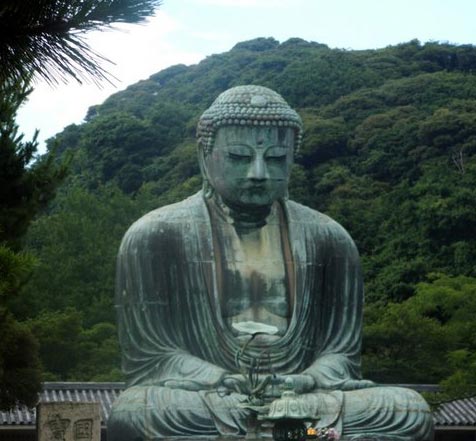
Pure Land Buddhism offers a way to enlightenment for people who can't handle the subtleties of meditation, endure long rituals, or just live especially good lives.
The essential practice in Pure Land Buddhism is the chanting of the name of Amitabha Buddha with total concentration, trusting that one will be reborn in the Pure Land, a place where it is much easier for a being to work towards enlightenment.
Pure Land Buddhism adds mystical elements to the basic Buddhist teachings which make those teachings easier (and more comforting) to work with.
These elements include faith and trust and a personal relationship with Amitabha Buddha, who is regarded by Pure Land Buddhists as a sort of saviour; and belief in the Pure Land, a place which provides a stepping stone towards enlightenment and liberation.
Pure Land Buddhism is particularly popular in China and Japan.
History
Pure Land Buddhism as a school of Buddhist thinking began in India around the 2nd century BCE.
It spread to China where there was a strong cult of Amitabha by the 2nd century CE, and then spread to Japan around the 6th century CE.
Pure Land Buddhism received a major boost to its popularity in the 12th century with the simplifications made by Honen.
A century later Shinran (1173-1262), a disciple of Honen, brought a new understanding of the Pure Land ideas, and this became the foundation of the Shin (true) sect.
Pure Land Buddhism took off in Japan when the monk Honen (1133-1212) simplified the teachings and practices of the sect so that anyone could cope with them.
He eliminated the intellectual difficulties and complex meditation practices used by other schools of Buddhism.
Honen taught that rebirth in the Pure Land was certain for anyone who recited the name with complete trust and sincerity. Honen said that all that was needed was...
Honen didn't simplify Buddhism through a patronising attitude to inferior people. He believed that most people, and he included himself, could not achieve liberation through any of their own activities. The only way to achieve buddhahood was through the help of Amitabha.
The Shin Sect
A century after Honan, one of his disciples, Shinran (1173-1262) brought a new understanding of the Pure Land ideas. Shinran taught that what truly mattered was not the chanting of the name but faith. Chanting on its own had no value at all.
Those who follow the Shin school say that liberation is the consequence of a person achieving genuine faith in Amitabha Buddha and his vow to save all beings who trusted in him.
Pure Land Buddhism offers a way to enlightenment for people who can't handle the subtleties of meditation, endure long rituals, or just live especially good lives.
The essential practice in Pure Land Buddhism is the chanting of the name of Amitabha Buddha with total concentration, trusting that one will be reborn in the Pure Land, a place where it is much easier for a being to work towards enlightenment.
Pure Land Buddhism adds mystical elements to the basic Buddhist teachings which make those teachings easier (and more comforting) to work with.
These elements include faith and trust and a personal relationship with Amitabha Buddha, who is regarded by Pure Land Buddhists as a sort of saviour; and belief in the Pure Land, a place which provides a stepping stone towards enlightenment and liberation.
Pure Land Buddhism is particularly popular in China and Japan.
History
Pure Land Buddhism as a school of Buddhist thinking began in India around the 2nd century BCE.
It spread to China where there was a strong cult of Amitabha by the 2nd century CE, and then spread to Japan around the 6th century CE.
Pure Land Buddhism received a major boost to its popularity in the 12th century with the simplifications made by Honen.
A century later Shinran (1173-1262), a disciple of Honen, brought a new understanding of the Pure Land ideas, and this became the foundation of the Shin (true) sect.
Pure Land Buddhism took off in Japan when the monk Honen (1133-1212) simplified the teachings and practices of the sect so that anyone could cope with them.
He eliminated the intellectual difficulties and complex meditation practices used by other schools of Buddhism.
Honen taught that rebirth in the Pure Land was certain for anyone who recited the name with complete trust and sincerity. Honen said that all that was needed was...
saying "Namu Amida Butsu" with a conviction that by saying it one will certainly attain birth in the Pure Land.
Honen
The result was a form of Buddhism accessible to anyone, even if they were illiterate or stupid.Honen
Honen didn't simplify Buddhism through a patronising attitude to inferior people. He believed that most people, and he included himself, could not achieve liberation through any of their own activities. The only way to achieve buddhahood was through the help of Amitabha.
The Shin Sect
A century after Honan, one of his disciples, Shinran (1173-1262) brought a new understanding of the Pure Land ideas. Shinran taught that what truly mattered was not the chanting of the name but faith. Chanting on its own had no value at all.
Those who follow the Shin school say that liberation is the consequence of a person achieving genuine faith in Amitabha Buddha and his vow to save all beings who trusted in him.


