Timothy Dexter was considered a lucky fool for selling coal to Newcastle and bed warmers to the tropics – and somehow making money on the ventures.

Lord Timothy Dexter with his hairless dog
He rounded up the stray cats of Federalist Newburyport, Mass., shipped them off to the Caribbean – and made money.
He wrote a semiliterate book without any punctuation – and it went into eight printings.
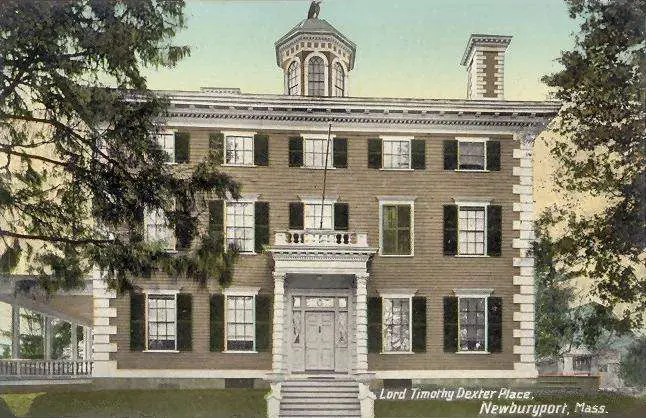
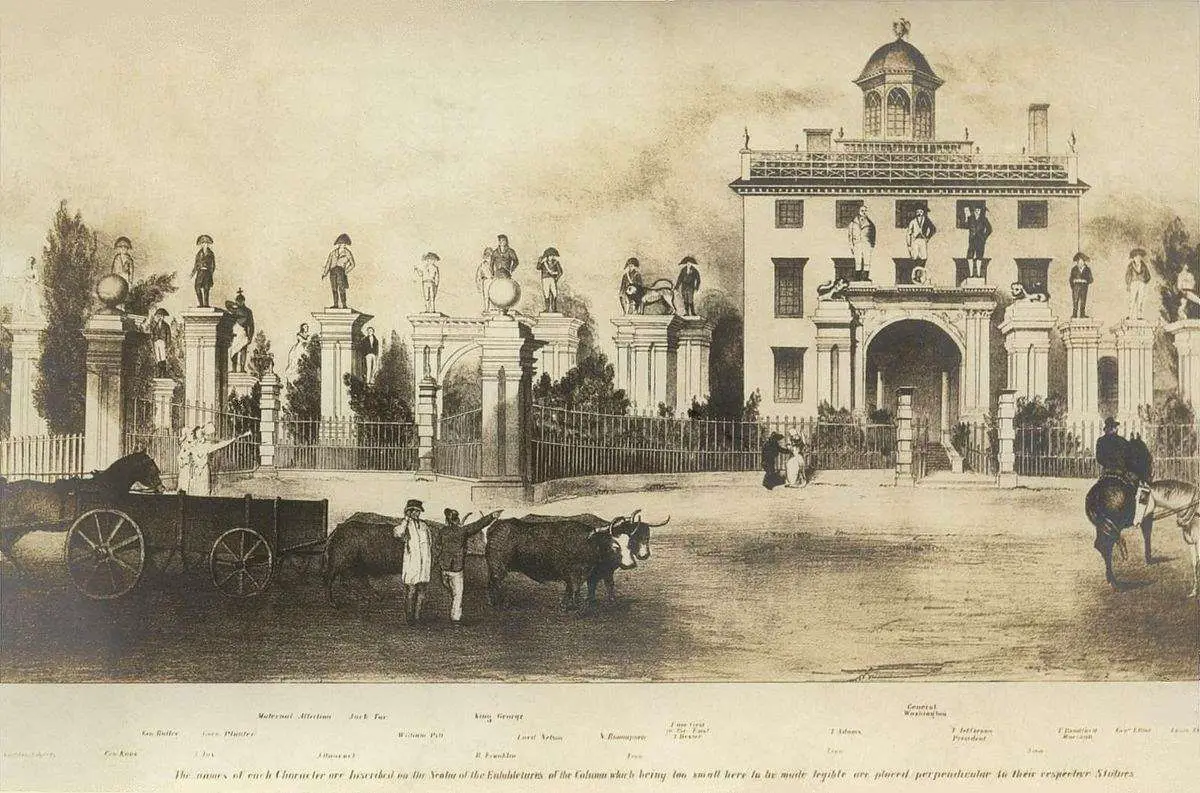
Timothy Dexter failed at the one thing that mattered most to him: acceptance by high society. Perhaps it was because he was vain and ridiculous. He did, after all, call himself a lord and stage his own mock funeral and surround his High Street mansion with painted wooden statues of the great men of history.
But the question still lingers even to this day: Was he incredibly lucky or incredibly shrewd?
He went to work as an indentured servant on a farm at the age of eight. At 14 he left the farm for Charlestown, Mass., to work as an apprentice dressing leather for breeches and gloves. When he finished his apprenticeship, his employer gave him a new suit of clothes, called a freedom suit.
Novelist John P. Marquand, another son of Newburyport, wrote two books about Timothy Dexter. The first repeated the legend, the second, Timothy Dexter Revisited, offered a more sympathetic view of the man. In Dexter’s case, noted Marquand, he received a good freedom suit. That “proves that Dexter had been sober and diligent,” Marquand wrote. “In fact, all evidence indicates that he was quiet and industrious for many years after his arrival in Newburyport, and not conspicuous until he suddenly made a fortune.”
Within a year Dexter bought land and married Elizabeth Frothingham, a modestly well-off widow nine years older than he. She had four children and a house.
He set up shop in the basement of his wife’s house, selling moosehide trousers, gloves, hides and blubber. Elizabeth also opened a shop selling notions.
By the end of the American Revolution, he had saved several thousand dollars. He spent it all on worthless Continental currency. When Congress decided to make good on the scrip, Dexter became a very rich man. Lucky or shrewd?
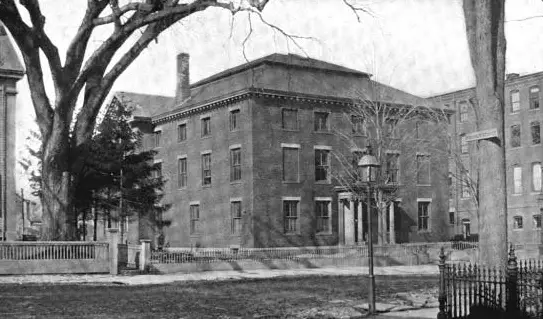
The Tracy house as public library, 1899
Something wrote Marquand, encouraged the fantastic side of Timothy Dexter’s temperament.
He famously shipped coals to Newcastle, where they sold at a premium during a coal miner’s strike.
He once sent bed warmers to the tropical West Indies, where they found use as tools in the molasses industry.
One year, Newburyport had a problem with stray cats. Town Meeting voted on an article to destroy them all. The motion failed by a vote of 50-50. The next day, Dexter put an ad in the paper offering to pay for stray cats and promising to treat them well. He sent them to the Caribbean, where warehouse owners paid a premium for them. Dexter may or may not have known about the infestation of mice bedevilling the plantations.
Dexter also sent gloves to Polynesia, where Portuguese traders bought them on their way to China.
He claimed he cornered the whalebone market just as the French fashion for large corsets — or was it hoop skirts? — arrived.
But like many wealthy people, Dexter may have wanted to bend the truth just a bit about how he made his money.
Elizabeth Dexter probably contributed to his need for acceptance. She came from the New Hampshire Gilman family, which had produced a governor, John Taylor Gilman. Timothy Dexter had had real estate dealings with his wife’s family, and they probably looked down on him. He began to call her a ghost and refused to acknowledge she was alive.
They had two children, Samuel and Nancy. Dexter hoped Samuel would turn into an educated gentleman. Instead, he turned into a reckless drunk. Sam convinced his father to let him take one of his ships to England to sell the cargo. Instead, he blew it all at the gambling table.
Nancy had beauty but no brains. She married Abraham Bishop, a Yale scholar with little money, and moved to New Haven with him. The marriage failed, he beat her and she took to drinking heavily. Alcohol did not improve her already feeble wits, so Nancy returned home where her family shut her away.
Amidst these troubles, Timothy Dexter claimed he grew increasingly “nervous.” And so he sold the Tracy house in 1796 and decamped to Chester, N.H.
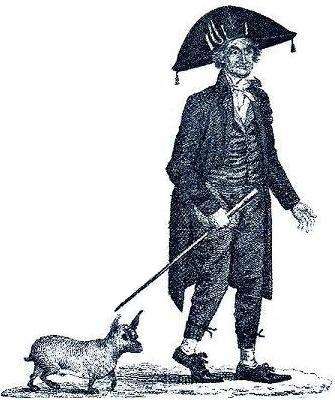
Lord Timothy Dexter with his hairless dog
He rounded up the stray cats of Federalist Newburyport, Mass., shipped them off to the Caribbean – and made money.
He wrote a semiliterate book without any punctuation – and it went into eight printings.
Timothy Dexter failed at the one thing that mattered most to him: acceptance by high society. Perhaps it was because he was vain and ridiculous. He did, after all, call himself a lord and stage his own mock funeral and surround his High Street mansion with painted wooden statues of the great men of history.
But the question still lingers even to this day: Was he incredibly lucky or incredibly shrewd?
TIMOTHY DEXTER
Timothy Dexter was born in Malden, Mass., on Jan. 22, 1747. The first Dexter had immigrated from Ireland a century before. His family had little money and young Timothy received little education.He went to work as an indentured servant on a farm at the age of eight. At 14 he left the farm for Charlestown, Mass., to work as an apprentice dressing leather for breeches and gloves. When he finished his apprenticeship, his employer gave him a new suit of clothes, called a freedom suit.
Novelist John P. Marquand, another son of Newburyport, wrote two books about Timothy Dexter. The first repeated the legend, the second, Timothy Dexter Revisited, offered a more sympathetic view of the man. In Dexter’s case, noted Marquand, he received a good freedom suit. That “proves that Dexter had been sober and diligent,” Marquand wrote. “In fact, all evidence indicates that he was quiet and industrious for many years after his arrival in Newburyport, and not conspicuous until he suddenly made a fortune.”
NEWBURYPORT
Dexter sold his freedom suit for eight dollars and 20 cents, which helped pay for his relocation to Newburyport sometime around 1767. At that time the seaport town attracted many artisans and tradesmen. Business boomed and Newburyport rivalled Boston in commercial importance. In 1767, Newburyport’s shipbuilders built 70 vessels.Within a year Dexter bought land and married Elizabeth Frothingham, a modestly well-off widow nine years older than he. She had four children and a house.
He set up shop in the basement of his wife’s house, selling moosehide trousers, gloves, hides and blubber. Elizabeth also opened a shop selling notions.
By the end of the American Revolution, he had saved several thousand dollars. He spent it all on worthless Continental currency. When Congress decided to make good on the scrip, Dexter became a very rich man. Lucky or shrewd?

The Tracy house as public library, 1899
SUDDEN WEALTH
When Dexter suddenly came into his fortune in 1791 or 1792, he lost his moorings, according to Marquand. He and his wife had toiled steadily for more than 20 years. He had risen by his own efforts in a competitive marketplace and won respect as a businessman. But now as a man of considerable means, the Timothy Dexter of legend and lore came into view.Something wrote Marquand, encouraged the fantastic side of Timothy Dexter’s temperament.
CATS AND BED WARMERS
He bought a magnificent house on State Street that had belonged to Nathaniel Tracy and now serves the Newburyport Public Library. He built two ships, the Mehitabel and the Congress. Stories are still told of the improbable — and lucky — trades he made.He famously shipped coals to Newcastle, where they sold at a premium during a coal miner’s strike.
He once sent bed warmers to the tropical West Indies, where they found use as tools in the molasses industry.
One year, Newburyport had a problem with stray cats. Town Meeting voted on an article to destroy them all. The motion failed by a vote of 50-50. The next day, Dexter put an ad in the paper offering to pay for stray cats and promising to treat them well. He sent them to the Caribbean, where warehouse owners paid a premium for them. Dexter may or may not have known about the infestation of mice bedevilling the plantations.
Dexter also sent gloves to Polynesia, where Portuguese traders bought them on their way to China.
He claimed he cornered the whalebone market just as the French fashion for large corsets — or was it hoop skirts? — arrived.
But like many wealthy people, Dexter may have wanted to bend the truth just a bit about how he made his money.
TROUBLE AT HOME
Life at home in the Tracy mansion did not match Timothy Dexter’s business success. His hot-tempered wife scolded him often, not without cause. He had a roving eye and drank far too much.Elizabeth Dexter probably contributed to his need for acceptance. She came from the New Hampshire Gilman family, which had produced a governor, John Taylor Gilman. Timothy Dexter had had real estate dealings with his wife’s family, and they probably looked down on him. He began to call her a ghost and refused to acknowledge she was alive.
They had two children, Samuel and Nancy. Dexter hoped Samuel would turn into an educated gentleman. Instead, he turned into a reckless drunk. Sam convinced his father to let him take one of his ships to England to sell the cargo. Instead, he blew it all at the gambling table.
Nancy had beauty but no brains. She married Abraham Bishop, a Yale scholar with little money, and moved to New Haven with him. The marriage failed, he beat her and she took to drinking heavily. Alcohol did not improve her already feeble wits, so Nancy returned home where her family shut her away.
Amidst these troubles, Timothy Dexter claimed he grew increasingly “nervous.” And so he sold the Tracy house in 1796 and decamped to Chester, N.H.
Last edited: