


The Story Of Sivakami’s Tears
By Mahesan Niranjan

Mahesan Niranjan
What a coincidence? On flight BA2042 from Colombo to London two days ago, I found myself sitting next to my drinking partner, the Sri Lankan Tamil fellow Sivapuranam Thevaram. I was returning from a visit to Sri Lanka, giving a talk at a conference on ICT for Emerging Regions on the subject of modern biology, and taking part in a PhD interim examination of two students whose research — on developing an automatic translation system between Sinhala and Tamil — I help supervise. Thevaram, when I found him, had already consumed a pint of Lion lager, a gin and tonic, and a small bottle of red wine. This was not a surprise.
What did surprise me was that the man was in tears and was staring at some lines in Tamil he had scribbled in his notebook. There were a few drops rolling down his cheeks which he unsuccessfully tried to hide from me. “What is the matter, Machan (buddy)?” I probed. “Well, it is my mothe…” I did not quite catch the last word, did he say “mother” or was it “motherland”?
“Eh?”
Have you ever wondered why we often relate the concepts of mother and country? Motherland, mawbima, thaayaham, mathru bhoomi, and thaay naadu are phrases in common use. On one rare occasion a father to country relationship was attempted (vaterland), but that did not go particularly well. We might think that this mother-country relationship is simply a convenient linguistic construct, invented once and copied in perpetuum. Largely true, but the observation also explains the audacious claim Thevaram made, in response to my “Eh”:
“My country belongs to my mother, not to the thugs who stole it from her.”
Sivakami
Permit me a paragraph of self-plagiarism, to give you the background.
Sivahamy comes from a farming family in the north of Sri Lanka, a poor village close to Jaffna town. They had enough to eat, but not much more. When the family is away in the fields, leaving the children at home, Sivahamy’s older sister takes charge of the cooking, but wouldn’t let anyone have their evening meal, until all of the family had returned after the day’s hard work, so they may share the food equally. When Sivahamy reached the age of 12, her father decided schooling was enough. An extra pair of hands in the fields would have fitted his human resource management agenda nicely. Kuruvaanavar, the school maths teacher, paid the family a visit. “She is very good in her studies,” he pleaded with the parents, “please let her continue.” The father wasn’t impressed, but Sivahamy’s mother rose to the occasion, over-ruled the husband, and made a firm decision that saw Sivahamy not just through secondary school, but also a degree programme at HillTop University. Just to calibrate that point of time in history, around the time Sivakami graduated and took a teaching job back in her village of Karainagar, several Oxbridge Colleges did not even admit women to undergraduate programmes.
The social mobility our third world country offered Sivakami back in the fifties, is unmatched in many developed countries even today. For instance in the UK, the best predictor of whether an 18 year old would go to university is if his/her parents had been. Free education being the strong link between mother and motherland, it is no wonder Thevaram once enjoyed the opportunity of being photographed at the picket line with striking Sri Lankan academics.
Thuggery: The word thuggery is a charitable term to describe the monotonically worsening system of governance in Sivakami’s country. More accurate descriptions bring lawyers in, and distract us from understanding a particularly sad state of affairs in our country. Terminology such as “terrorism”, “war crimes” and “genocide” are thrown about by those with vested agendas on one side and those defending with dictionary definitions on the other.
Shortly after they retired, Sivakami and her husband Sivapuranam left Jaffna. They were stopped — way back in 1991, the role of ordinary Tamil people as protective shields had already been invented — arrested and jailed for ten days and threatened with execution. Escape was only possible because one of the thugs recognized the teacher from the school he studied.
Fast forward a bit, and it was on the day our Commander-In-Chief proclaimed zero civilian casualties, Sivakami told Thevaram she knew more than a dozen who died acting the part of human shields that she herself had escaped from.
Would the term thuggery accurately capture the evils committed in the name of the Tamil people, by those claiming to represent the Tamil people, by way of the massacres in Anuradhapura, Aranthalawa, Kalmunai and Keppitigollawa, with sponsors of these crimes going through their usual motions of denial (“you are saying that because you are being paid by the government”) followed by justification (“these things happen, it is an armed struggle, have you not noticed?”)? And would it describe the eviction from Jaffna the tailor Miskin, who was contracted by Sivakami to make Thevaram’s first pair of trousers?
Would the term thuggery accurately capture the evil massacres of the Navanthurai boat passengers or the people who took sanctuary in the Navali church? And would it describe the killings of the protesting fisherman of Chilaw, the garment factory worker of Katunayake, or the bystander at the protest in Weliweriya?
Would the term thuggery accurately capture the glorification of the years of rule in the Wanni: “Under their rule there was discipline in the society, you see, women could walk on the streets at night!” Or would we be comfortable using that word to describe the stance of my other drinking partner, Pol: “What do they mean war crimes, war is crime,” as a catchphrase to sweep evils under the rug?
And how about thuggery as a term to explain an elderly aunt of mine in London, who, on the day Luxman Kadirkamar was killed remarked: “they should have finished him long ago,” continuing with another helping of idli and saambaar ?
Obituary: “We regret to inform friends and family that Sivapuranam Sivakami, passed away after a brief illness. Mortal remains were cremated at Kanatte and ashes dispersed into the sea at Karainagar.” The Ceylon Daily News can also be sometimes accurate, readers will note.
Democracy: Sri Lanka has a democratic system of governance. At regular intervals, our people are invited to polling booth and mark crosses against names. Winners are decided by counting these votes. There are many variants of this process, and the one that our country adopted in 1978 — irrespective of the cunning plan the old fox had in mind when introducing it — is, speaking as a statistician, the fairest we know of. Critics of proportional representation prefer the first-past-the-post system which produces stable governments. The potential for lack of stability is dealt with in a uniquely Sri Lankan way: We buy the opposition.
But have you noticed we don’t seem to be comfortable with our democracy? We invent qualifiers. The old fox introduced “Dharmishta.” But that term, difficult to spell, and even more difficult to explain to foreigners, was quickly abandoned. Our diplomats did better. An eloquent ambassador declared that Sri Lanka was a “functioning democracy.” The precise meaning of “function” left undefined, the claim did gain some currency for a short period of time, but that too decayed quite quickly.
Yet another diplomat described ours as a “vibrant democracy” in an interview with an American journalist who dared ask questions about the “20-30 protesting women,” – an estimate we believe in because it comes from someone numerate enough to count at least up to 800! Our diplomat gave the journalist a nice blow below the belt. “We are 2500 years old” he said, most eloquently and without batting an eyelid.
History for the American journalist being about a tenth of that timescale, he was shocked and confused. “Did I not study somewhere that it was the Greeks who invented democracy?” he wondered, “Are these Sri Lankans the same as the Greeks?” (His geography is as bad as his history.) “Maybe I am confusing,” (Yes, high school was many years ago.) “Yeah, the Greeks invented yoghurt, the Sri Lankans must have invented democracy,” he concluded on his way home.
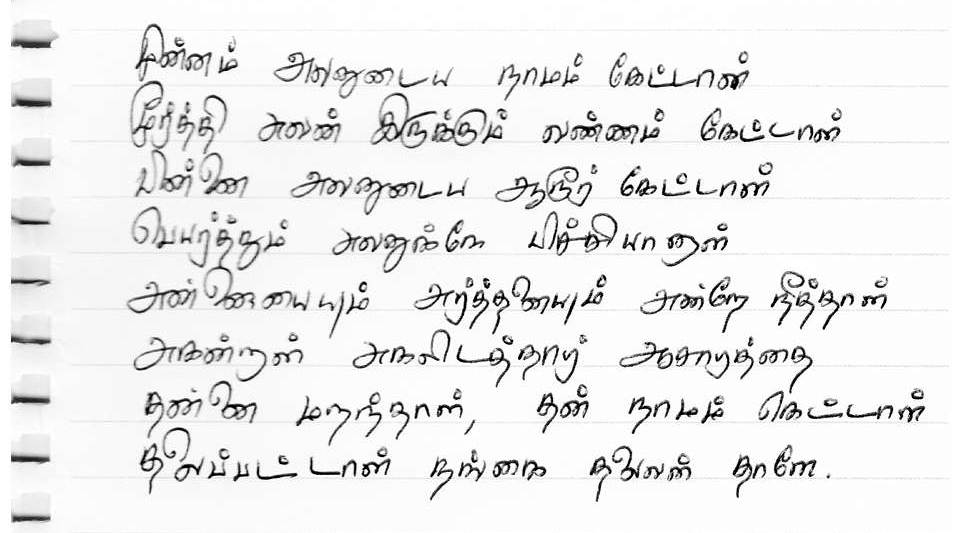
Funeral: Hindu rituals were performed at Sivakami’s funeral. The congregation being from all faiths and no faiths, the priest was contracted to a fast pace package. The thevaram (Hindu religious song) singer was not particularly good, his scales wide of the mark. But just towards the end he sang Thirunaavukkarasar’s verse “munnam avanudaiya naaman kEddaaL,” which he did rather well. (These are the lines I found my friend scribbling on his notepad.) They are the very best of this poet and recently used most effectively by Kalki in the historic novel Sivakamiyin Sapatham. Those lines meant a lot to Sivakami’s children. It was about their childhood, the beautiful village of Karainagar, the mountain town of Bandarawela, the “Jaffna Seven” of Nallur, their parents’ retired life in Thalawathugoda, and above all, a value system that precisely captured their mother’s life.
Those lines also resonated about a way of life that had been stolen from her, by a hegemonic political process that manifested callousness and brutality in its oppressive side, and a stupid misadventure of a response that rapidly transformed itself into outright fascism. Both these processes danced in tango, reinforcing each other, for over half a century since we gained independence from the suddhas (white folk), and had stolen from Sivakami the country that rightfully belonged to her, and to which she remained loyal right up to her last breath.
Tears: At the pearly gates, collecting her well-earned ticket of admission to Heaven, Sivakami pauses to look back. Far away, she sees her country being dragged towards the other place, stolen by thuggery.
Her eyes are full of tears.
They were the tears that my friend tried to hide from me in flight BA2042 the other day.
colombotelegraph.com
By Mahesan Niranjan

Mahesan Niranjan
What a coincidence? On flight BA2042 from Colombo to London two days ago, I found myself sitting next to my drinking partner, the Sri Lankan Tamil fellow Sivapuranam Thevaram. I was returning from a visit to Sri Lanka, giving a talk at a conference on ICT for Emerging Regions on the subject of modern biology, and taking part in a PhD interim examination of two students whose research — on developing an automatic translation system between Sinhala and Tamil — I help supervise. Thevaram, when I found him, had already consumed a pint of Lion lager, a gin and tonic, and a small bottle of red wine. This was not a surprise.
What did surprise me was that the man was in tears and was staring at some lines in Tamil he had scribbled in his notebook. There were a few drops rolling down his cheeks which he unsuccessfully tried to hide from me. “What is the matter, Machan (buddy)?” I probed. “Well, it is my mothe…” I did not quite catch the last word, did he say “mother” or was it “motherland”?
“Eh?”
Have you ever wondered why we often relate the concepts of mother and country? Motherland, mawbima, thaayaham, mathru bhoomi, and thaay naadu are phrases in common use. On one rare occasion a father to country relationship was attempted (vaterland), but that did not go particularly well. We might think that this mother-country relationship is simply a convenient linguistic construct, invented once and copied in perpetuum. Largely true, but the observation also explains the audacious claim Thevaram made, in response to my “Eh”:
“My country belongs to my mother, not to the thugs who stole it from her.”
Sivakami
Permit me a paragraph of self-plagiarism, to give you the background.
Sivahamy comes from a farming family in the north of Sri Lanka, a poor village close to Jaffna town. They had enough to eat, but not much more. When the family is away in the fields, leaving the children at home, Sivahamy’s older sister takes charge of the cooking, but wouldn’t let anyone have their evening meal, until all of the family had returned after the day’s hard work, so they may share the food equally. When Sivahamy reached the age of 12, her father decided schooling was enough. An extra pair of hands in the fields would have fitted his human resource management agenda nicely. Kuruvaanavar, the school maths teacher, paid the family a visit. “She is very good in her studies,” he pleaded with the parents, “please let her continue.” The father wasn’t impressed, but Sivahamy’s mother rose to the occasion, over-ruled the husband, and made a firm decision that saw Sivahamy not just through secondary school, but also a degree programme at HillTop University. Just to calibrate that point of time in history, around the time Sivakami graduated and took a teaching job back in her village of Karainagar, several Oxbridge Colleges did not even admit women to undergraduate programmes.
The social mobility our third world country offered Sivakami back in the fifties, is unmatched in many developed countries even today. For instance in the UK, the best predictor of whether an 18 year old would go to university is if his/her parents had been. Free education being the strong link between mother and motherland, it is no wonder Thevaram once enjoyed the opportunity of being photographed at the picket line with striking Sri Lankan academics.
Thuggery: The word thuggery is a charitable term to describe the monotonically worsening system of governance in Sivakami’s country. More accurate descriptions bring lawyers in, and distract us from understanding a particularly sad state of affairs in our country. Terminology such as “terrorism”, “war crimes” and “genocide” are thrown about by those with vested agendas on one side and those defending with dictionary definitions on the other.
Shortly after they retired, Sivakami and her husband Sivapuranam left Jaffna. They were stopped — way back in 1991, the role of ordinary Tamil people as protective shields had already been invented — arrested and jailed for ten days and threatened with execution. Escape was only possible because one of the thugs recognized the teacher from the school he studied.
Fast forward a bit, and it was on the day our Commander-In-Chief proclaimed zero civilian casualties, Sivakami told Thevaram she knew more than a dozen who died acting the part of human shields that she herself had escaped from.
Would the term thuggery accurately capture the evils committed in the name of the Tamil people, by those claiming to represent the Tamil people, by way of the massacres in Anuradhapura, Aranthalawa, Kalmunai and Keppitigollawa, with sponsors of these crimes going through their usual motions of denial (“you are saying that because you are being paid by the government”) followed by justification (“these things happen, it is an armed struggle, have you not noticed?”)? And would it describe the eviction from Jaffna the tailor Miskin, who was contracted by Sivakami to make Thevaram’s first pair of trousers?
Would the term thuggery accurately capture the evil massacres of the Navanthurai boat passengers or the people who took sanctuary in the Navali church? And would it describe the killings of the protesting fisherman of Chilaw, the garment factory worker of Katunayake, or the bystander at the protest in Weliweriya?
Would the term thuggery accurately capture the glorification of the years of rule in the Wanni: “Under their rule there was discipline in the society, you see, women could walk on the streets at night!” Or would we be comfortable using that word to describe the stance of my other drinking partner, Pol: “What do they mean war crimes, war is crime,” as a catchphrase to sweep evils under the rug?
And how about thuggery as a term to explain an elderly aunt of mine in London, who, on the day Luxman Kadirkamar was killed remarked: “they should have finished him long ago,” continuing with another helping of idli and saambaar ?
Obituary: “We regret to inform friends and family that Sivapuranam Sivakami, passed away after a brief illness. Mortal remains were cremated at Kanatte and ashes dispersed into the sea at Karainagar.” The Ceylon Daily News can also be sometimes accurate, readers will note.
Democracy: Sri Lanka has a democratic system of governance. At regular intervals, our people are invited to polling booth and mark crosses against names. Winners are decided by counting these votes. There are many variants of this process, and the one that our country adopted in 1978 — irrespective of the cunning plan the old fox had in mind when introducing it — is, speaking as a statistician, the fairest we know of. Critics of proportional representation prefer the first-past-the-post system which produces stable governments. The potential for lack of stability is dealt with in a uniquely Sri Lankan way: We buy the opposition.
But have you noticed we don’t seem to be comfortable with our democracy? We invent qualifiers. The old fox introduced “Dharmishta.” But that term, difficult to spell, and even more difficult to explain to foreigners, was quickly abandoned. Our diplomats did better. An eloquent ambassador declared that Sri Lanka was a “functioning democracy.” The precise meaning of “function” left undefined, the claim did gain some currency for a short period of time, but that too decayed quite quickly.
Yet another diplomat described ours as a “vibrant democracy” in an interview with an American journalist who dared ask questions about the “20-30 protesting women,” – an estimate we believe in because it comes from someone numerate enough to count at least up to 800! Our diplomat gave the journalist a nice blow below the belt. “We are 2500 years old” he said, most eloquently and without batting an eyelid.
History for the American journalist being about a tenth of that timescale, he was shocked and confused. “Did I not study somewhere that it was the Greeks who invented democracy?” he wondered, “Are these Sri Lankans the same as the Greeks?” (His geography is as bad as his history.) “Maybe I am confusing,” (Yes, high school was many years ago.) “Yeah, the Greeks invented yoghurt, the Sri Lankans must have invented democracy,” he concluded on his way home.
Funeral: Hindu rituals were performed at Sivakami’s funeral. The congregation being from all faiths and no faiths, the priest was contracted to a fast pace package. The thevaram (Hindu religious song) singer was not particularly good, his scales wide of the mark. But just towards the end he sang Thirunaavukkarasar’s verse “munnam avanudaiya naaman kEddaaL,” which he did rather well. (These are the lines I found my friend scribbling on his notepad.) They are the very best of this poet and recently used most effectively by Kalki in the historic novel Sivakamiyin Sapatham. Those lines meant a lot to Sivakami’s children. It was about their childhood, the beautiful village of Karainagar, the mountain town of Bandarawela, the “Jaffna Seven” of Nallur, their parents’ retired life in Thalawathugoda, and above all, a value system that precisely captured their mother’s life.
Those lines also resonated about a way of life that had been stolen from her, by a hegemonic political process that manifested callousness and brutality in its oppressive side, and a stupid misadventure of a response that rapidly transformed itself into outright fascism. Both these processes danced in tango, reinforcing each other, for over half a century since we gained independence from the suddhas (white folk), and had stolen from Sivakami the country that rightfully belonged to her, and to which she remained loyal right up to her last breath.
Tears: At the pearly gates, collecting her well-earned ticket of admission to Heaven, Sivakami pauses to look back. Far away, she sees her country being dragged towards the other place, stolen by thuggery.
Her eyes are full of tears.
They were the tears that my friend tried to hide from me in flight BA2042 the other day.
colombotelegraph.com


