Angry protests in Germany’s financial capital 05/11/2011
Angry protests in Germany’s financial capital 05/11/2011
Some 1,200 supporters of the “Occupy Frankfurt” movement protested in Germany’s financial capital on Saturday November 5 for a more equal distribution of wealth across the world.
At euronews we believe in the intelligence of our viewers and we think that the mission of a news channel is to deliver facts without any opinion or bias, so that the viewers can make their own opinion on world events.
Flash floods cause more havoc in Genoa - ITALY 04/11/2011
Flash floods have once again struck Genoa and Italy’s western coastline following torrential rain. Floodwaters poured through Genoa for the second time in eight days, sweeping up cars, trees and furniture from low-lying homes.
Torrential rains are continuing to cause misery in Europe.
In all, 11 regions in France were on flood alert including the Var were 750 people have been evacuated.
So far three people have been reported dead – a German living in a van by a river and an elderly couple.
Hundreds of thousands have been affected.
“I’m going to lose everything here,” said one woman looking round her flooded home. “I don’t even know where the water will stop, where it will rise to. It’s a catastrophe.”
Italy has been even worse hit with seven deaths in the port city of Genoa.
The mayor there is facing calls to resign for her handling of the situation – in particular for not shutting schools on Friday when flash floods hit.
In Turin in the industrial north, the biggest river in the country, the Po, is already breaching its banks in certain areas.
And in Naples in the south access to the ruins of ancient Pompeii has been closed and a key football match cancelled as the situation worsens.
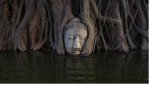
A Buddha head in the trunk of a Bodhi tree is partially submerged by flood waters in the ruins of Wat Mahathat temple in Thailand’s ancient capital Ayutthaya.
Flood water entered one of Bangkok’s popular tourist attractions, Safari World. Almost half of the zoo was flooded overnight but all animals were taken to higher ground.
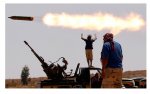
A Belarussian soldier from the Interior Ministry’s special unit displays his skills at his base near the village of Volovshchina, about 25 km (16 miles) west of Minsk.
Greeks are still waiting to find out who will lead a national unity government.
The front-runner is the former deputy head of the European Central Bank Lucas Papademos. He used to run the Greek Central Bank and oversaw the introduction of the euro.
Others are betting on Finance Minister Evangelos Venizelos who has managed to persuade parliament to adopt tough austerity measures in recent months.
Socialist George Papandreou agreed to step down as Prime Minister after talks with the president and the leader of the conservative opposition, Antonis Samaras last night. But the two parties are so far apart, many question just how united a unity government will actually be.
Once formed, it will need to push a new bailout package through parliament fast, or it will run out of money by mid-December.
The EU and the IMF are maintaining pressure on Athens to put its house in order but the task remains monumental.
Greece’s politics and economy are seen as so chaotic they have shaken international confidence in the entire euro project.
The end of a political dynasty?
After two years as Greek Prime Minister, George Papandreou leaves office following a turbulent couple of weeks that saw him taking flak from every direction.
Though he managed to win a crucial confidence vote on Friday, that was not enough to keep him in the top job.
It is a position filled by three generations of his family, including his father who served two separate terms as prime minister totalling 11 years, and his grandfather who held the post three times.
Papandreou had an international education, studying in the US, Canada, Sweden and the UK. He was sometimes ridiculed for mistakes he made when speaking Greek.
Scoring a decisive victory against conservative opponents in the 2009 general election, Papandreou became popular after promising a stimulus package, rather than his rivals’ austerity measures.
Unfortunately, he found himself leading a government that had no choice but to make rounds of harsh cuts as it dealt with the economic reality of the country’s massive deficit.
As the public protests and strikes increased, Papandreou’s position teetered on the brink when he proposed a referendum on a new bailout deal.
Nevertheless, his fall from power may not be too concerning for someone who said he never saw politics as a profession.