


Incredible Photos: A Child is Born
Swedesh photographer Lennart Nilsson spent 12 years of his life taking pictures of the foetus
developing in the womb. These incredible photographs were taken with conventional cameras
with macro lenses, an endoscope and scanning electron microscope. Nilsson used a
magnification of hundreds of thousands and “worked” right in the womb. His first photo of the
human foetus was taken in 1965.
Sperm in the fallopian tube
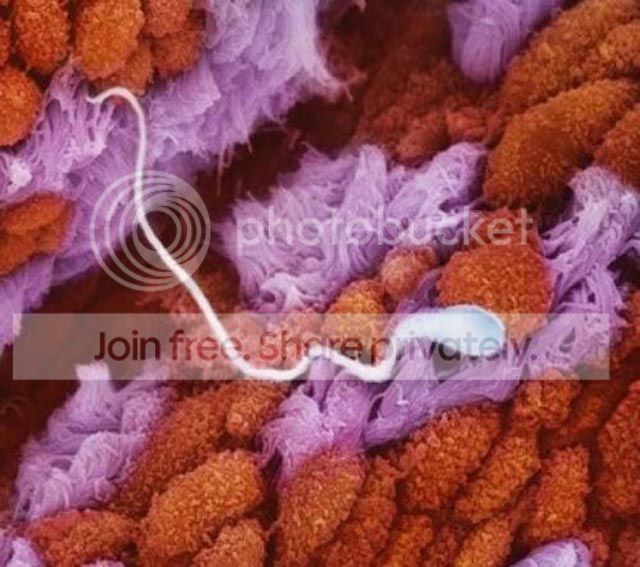
The egg cell

Will they have a date?

The fallopian tube

Two sperms are contacting with the egg cell

The winning sperm

Sperm
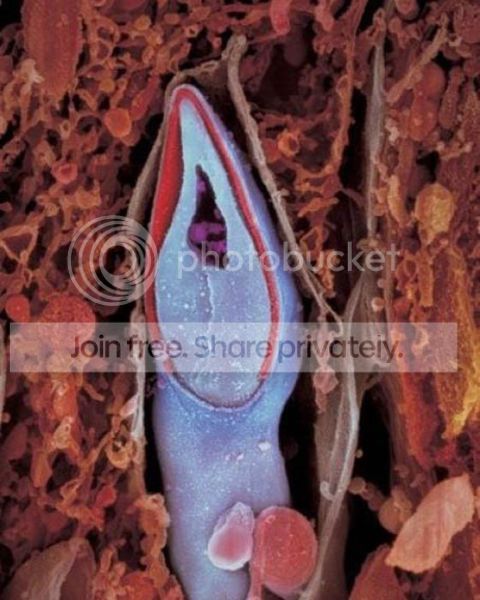
5-6 days.
The clump has developed into a blastocyst, containing many more cells, and has entered the womb

8 days.
The human embryo is attached to a wall of the uterus

The brain starts to develop in the human embryo
Swedesh photographer Lennart Nilsson spent 12 years of his life taking pictures of the foetus
developing in the womb. These incredible photographs were taken with conventional cameras
with macro lenses, an endoscope and scanning electron microscope. Nilsson used a
magnification of hundreds of thousands and “worked” right in the womb. His first photo of the
human foetus was taken in 1965.
Sperm in the fallopian tube
The egg cell
Will they have a date?

The fallopian tube
Two sperms are contacting with the egg cell
The winning sperm

Sperm
5-6 days.
The clump has developed into a blastocyst, containing many more cells, and has entered the womb
8 days.
The human embryo is attached to a wall of the uterus
The brain starts to develop in the human embryo

24 days.
The one-month-old embryo has no skeleton yet. There is only a heart that starts beating on the 18th day

4 weeks

4.5 weeks

5 weeks: Approximately 9 mm.
You can now distinguish the face with holes for eyes, nostrils and mouth

40 days.
Embryonic cells form the placenta.
This organ connects the embryo to the uterine wall allowing nutrient uptake, waste elimination and gas exchange via the woman’s blood supply
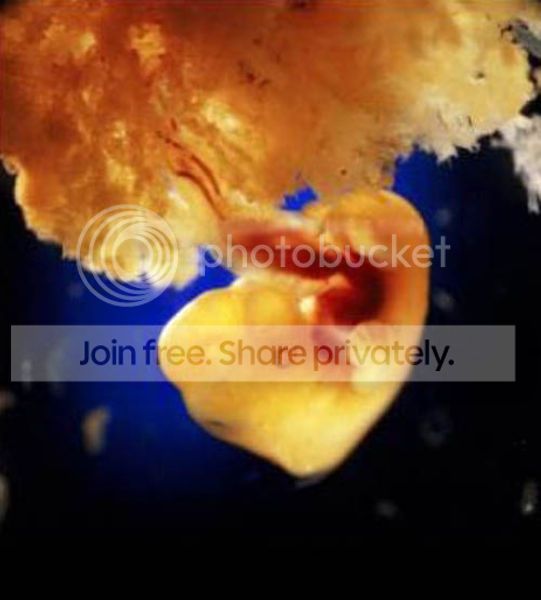
Eight weeks.
The rapidly-growing embryo is well protected in the foetal sac

10 weeks.
The eyelids are semi-shut. They will close completely in a few days

16 weeks.
The foetus uses its hands to explore its own body and its surroundings

The skeleton consists mainly of flexible cartridge.
A network of blood vessels is visible through the thin skin
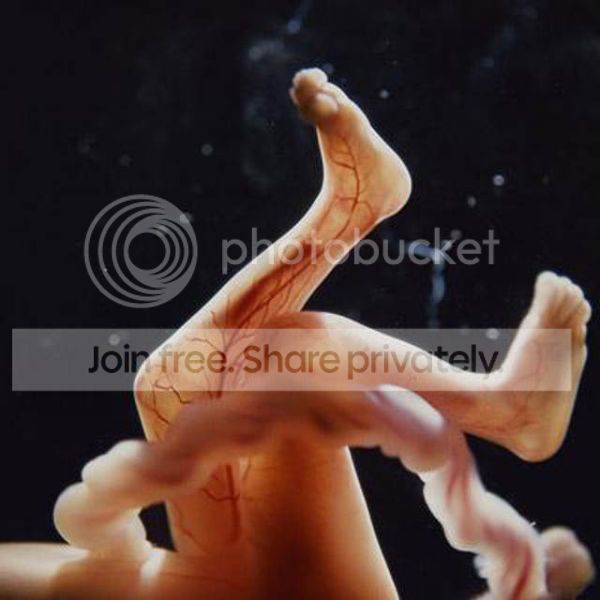
18 weeks: Approximately 14 cm.
The foetus can now perceive sounds from the outside world

19 weeks

20 weeks: Approximately 20 cm.
Woolly hair, known as lanugo, covers the entire head

24 weeks

26 weeks

6 months.
There are still 8-10 weeks ahead, so the little human is getting ready to leave the uterus. It turns upside down because it will be easier to get out this way

36 weeks. The child will see the world in 4 weeks

Last edited:


