

Latest ads
-
Jobreceive.com for sale
- Blogerwiki
- Updated:
-
 Post Your Vehicle for Sale — FREE! - https://libro.lk
- Kalu_Puth
- Updated:
-
 ඔයාගෙ Assignment හෝ Thesis එක හරියට හදාගමු
- ErMurazor
- Updated:
-
BlackWall V2ray servers
- hu KANNA
- Updated:
-
 Peppa Pig Family Plush Toy Set – 5 Characters
- anil1961
- Updated:
You are using an out of date browser. It may not display this or other websites correctly.
You should upgrade or use an alternative browser.
You should upgrade or use an alternative browser.


හොග් ගාල ගියොත් නන් අවුලක් නෑ. මොළේ නහරයක් පුපුරල එක්තැන් උනොත් තමයි දුක් විදින්න වෙන්නෙ. ඒ නිසා පරිස්සමෙන්.

ඇත්තම කතාව මූට හොඳ සැපවත් ජීවිතයක් ගෙව්වැකි කිසි කරදරයක් නැතුව. දරුවෝ බලන්න වගකීම් නෑ. අම්මලා තාත්තලාගේ වගකීම් නෑ. ගෑණියෙක්, කෙල්ලෙක් නෑ. ඒත් ඉතින් දෙයක් කරන්නෙ නැති එකනෙ වැඩේ.කිරියෙ කීදෙනෙක් ත්රෙඩ් කීයක කිව්ව ද ඔය රටේ නැති දහ ජරාව බොන එකයි, තෙල් කෑම කන එකයි නවත්තන්න කියලා. ඒ වුණාට තමුන්නැහේ නිකන්වත් ඒ කියන දේවල් ගණන් ගන්නව ද? ඒ කියන ඒවත් තමුන්නැහේ නිකන් ජෝක් එකට ගන්න ගතියක් තියෙන්නෙ. ලෙඩක් ආව දවසක මතක්වේවි "අනේ කිරියෙ අය මේ දේ වෙයි කියලා කලින් කිව්වා නේද" කියලා. නරකට නෙමේ මහත්තයෝ මේවා කියන්නෙ ඔයාගෙම හොදටයි. ඒ නිසා ඒ කියන දේවල් මීට පස්සෙවත් ටිකක් සීරියස්ව හිතට ගන්න බලන්න.
තමුන්ට හිතිච්ච වෙලේක ජිම් එකකට ගියෑකි. එතනින් කෑල්ලක් දෙකක් ටෝක් කරගන්නත් පුලුවන් ඕනෙ නම්. තව හිතෙන හිතෙන වෙලාවක රට වටේ ඕනෙ තැනක ඇවිදින්න යන්නත් පුලුවන්. දැන් මූ ෆ්රීලාන්ස් කරලා හම්බ කරනවා නම් කැමති වෙලේක කැමති තැනක ගිහින් වැඩ කරන්නත් පුලුවන්.
මම මූට මීට අවුරුදු ගාණකට කලින් කියන්න ඇති දැන් කවුරුත් නැති එකේ රටකට වත් ගිහින් රස්සාවක් කරලා ආතල් එකේ ඉඳපන් කියලා.
@Heshan Daminda මාර නිදහස් ජීවිතයක්නෙ බන් උඹට තියෙන්නෙ. ඒකෙන් වැඩක් ගනින්කො. වෙන එවුන්ට එක්කො දරුවන්ගෙ ප්රශ්න, නැත්නම් ගෑණිගෙ , දෙමව්පියන්ගේ ප්රශ්න. රස්සා ප්රශ්න. උඹට ඔය මොකුත් නෑනෙ.

කොලා ආයි නැගල ආයි බැහැල ආයි නැගල..
කොලා ආයි නැගල ආයි බැහැල ආයි නැගල..
කොලා ආයි නැගල ආයි බැහැල ආයි නැගල..

මගෙනං කොරෙස්ටරෝල් වැඩි නැතුව ඇති
ට්රයිග්ලිසරයිඩ් වැඩියි
අවුරුදු ගානකින් මේකක් බැලුවෙ නෑ
ජොලියටත් එක්ක බැලුවනං හරි නේද
කොච්චර වෙලා උඹට නොකා ඉන්න කිව්වද?
කිරි හෝ තේ බොන්නත් එපා කිව්වද?

පැය 12නේ නොකා හිටියේ. කොහොමත් මම උදේට තේ බොන්නේ නෑනේ. වතුර විතරයි එතකන්.
මගෙනං කොරෙස්ටරෝල් වැඩි නැතුව ඇති
ට්රයිග්ලිසරයිඩ් වැඩියි
අවුරුදු ගානකින් මේකක් බැලුවෙ නෑ
ජොලියටත් එක්ක බැලුවනං හරි නේද
කොච්චර වෙලා උඹට නොකා ඉන්න කිව්වද?
කිරි හෝ තේ බොන්නත් එපා කිව්වද?

මන් හිතන්නෙ ලංකාවෙ late 20s වල ඉන්න බහුතරේක තත්වෙ ඕක තමයි, හිටපු ගමන් හොක් ගාල යන තරුන උන් වැඩි වේගෙන එන්නෙ කෝරෝන වැක්සීන් වල අව්ලක් නෙවි


කොහොමද kmh එක?

ඔය මදි නේ. තව රෑට නිදි මරන්න, කඩවල්වල තෙල් කෑම කන එක + ජරාව බොන එක දිගටම කරන්න.
ඔවු ඔවු මෙහෙම තමයි කරන්න ඕන..
එතකොට මේ ගණන් තව හොඳටම ඉහල යයි ඉක්මනින්ම....
එතකොට හුචස් ගාලා යයි .....
අනේ මන්ද හේෂාන් ... මොනවා කරනවද කියල.....
දවසට පැය ක් ඇවිදින්න. රෑ 10 වෙනකොට වත් නිදියන්න උදේ 5ට නැගිටල උයන්න... ඊට පස්සෙ පැයක් ඇවිදින්න... ඊට පස්සෙ ඔයාගෙ අනෙක් වැඩපල කරන්න... liquor සම්පූර්ණයෙන්ම නවත්තන්න. මෙහෙම කලොත් අඩුම ගානෙ තාත්ත ජීවත් වුන වයස වෙනකම් වත් ජීවත් වෙන්න පුළුවන් වෙයි.....
නැත්තම් ඉතිං ....,...
297…
Reduce sugars / carb / lipds
Exercise
Stop smoking
May need a statin


කොහොමද kmh එක?
No idea, the smartwatch doesn't track Kmh ne
 just the time exercised (via heartbeats per minute) and an approximation of calories burnt


You Gotta Pump Those Numbers Up, Those Are Rookie Numbers
මාත් බෙහෙත් ගන්නවා බං
මාත් බෙහෙත් ගන්නවා බං


Strava use කරන්න මචන්..No idea, the smartwatch doesn't track Kmh ne


SUBSCRIBE

Medically reviewed by Amy Richter, RD, Nutrition — Written by Jo Lewin R.N. — Updated on December 21, 2023
The two main types of cholesterol are high-density lipoprotein (HDL) or “good” cholesterol, and low-density lipoprotein (LDL) or “bad” cholesterol. Some cholesterol is needed in the body, but high levels can be dangerous.
Along with smoking and high blood pressure, raised blood cholesterol is one of the main risk factorsTrusted Source for heart disease. People can reduce their blood cholesterol with a healthful diet, exercise, and medication.
In this article, we look at HDL and LDL in detail, including what makes one good and the other bad, as well as what a person can do to keep levels in check.
 Share on PinterestWestend61/Getty Images
LDL cholesterol is often called bad cholesterol. If there is too much LDL cholesterol in the blood, it builds up in the walls of the blood vessels, causing them to narrow and stiffen.
A buildup of LDL cholesterol reduces blood flow and can increase the risk of heart attack or stroke.
HDL or good cholesterol can move LDL cholesterol from the blood to the liver, which breaks it down for disposal as waste. HDL cholesterol is referred to as good cholesterol because it reduces the level of cholesterol in the blood.
Higher HDL levels are linked toTrusted Source a reduced risk of heart attack and heart disease.
Get Our Weekly Heart Health Newsletter
Join over 300K subscribers in receiving guidance on treatment options, managing cholesterol, and the latest on condition breakthroughs.
Enter your email
JOIN NOW
Also get our MNT Daily News newsletter
Your privacy is important to us
A desirable ratioTrusted Source is 5:1, and an optimal ratio is 3.5:1. The lower this number is, the healthier a person’s cholesterol levels are.
Total cholesterol does fluctuate, so more than one blood test might be required for an accurate assessment. Levels can change following a meal, so sometimes a blood test will be taken first thing in the morning before a person has breakfast.
Studies suggest that the total cholesterol to HDL ratio is a better marker of the risk of heart disease than LDL cholesterol levels alone.
Non-HDL cholesterol
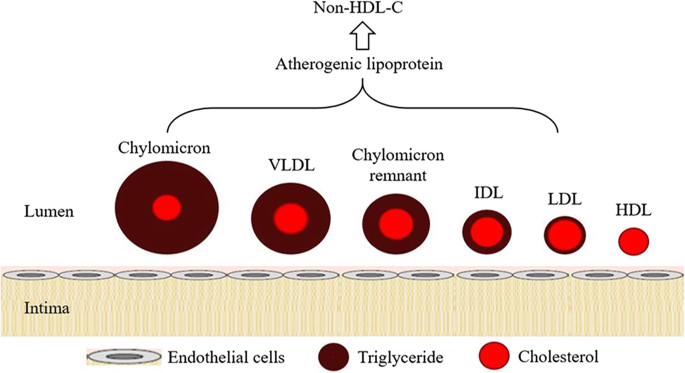
Another method of assessing cholesterol levels is calculating a non-HDL cholesterol level. This is measured by subtracting HDL cholesterol from the total cholesterol.
This method is considered to be more accurateTrusted Source by some doctors because it includes very low-density lipoprotein (VLDL) levels in the calculation.
Similarly to LDL cholesterol, VLDL cholesterol can also build up inside the walls of blood vessels, which is undesirable.
Ideally, a non-HDL cholesterol level should be less than 130 mg/dL. A higher value than that increases the risk for heart disease.
Copied
What is the difference between HDL and LDL cholesterol?

Medically reviewed by Amy Richter, RD, Nutrition — Written by Jo Lewin R.N. — Updated on December 21, 2023
- HDL vs. LDL
- Ideal ranges
- Ratios
- Causes of high LDL cholesterol
- Reduce LDL levels
- Increase HDL levels
- Summary
The two main types of cholesterol are high-density lipoprotein (HDL) or “good” cholesterol, and low-density lipoprotein (LDL) or “bad” cholesterol. Some cholesterol is needed in the body, but high levels can be dangerous.
Along with smoking and high blood pressure, raised blood cholesterol is one of the main risk factorsTrusted Source for heart disease. People can reduce their blood cholesterol with a healthful diet, exercise, and medication.
In this article, we look at HDL and LDL in detail, including what makes one good and the other bad, as well as what a person can do to keep levels in check.
HDL vs. LDL cholesterol

LDL cholesterol is often called bad cholesterol. If there is too much LDL cholesterol in the blood, it builds up in the walls of the blood vessels, causing them to narrow and stiffen.
A buildup of LDL cholesterol reduces blood flow and can increase the risk of heart attack or stroke.
HDL or good cholesterol can move LDL cholesterol from the blood to the liver, which breaks it down for disposal as waste. HDL cholesterol is referred to as good cholesterol because it reduces the level of cholesterol in the blood.
Higher HDL levels are linked toTrusted Source a reduced risk of heart attack and heart disease.
Get Our Weekly Heart Health Newsletter
Join over 300K subscribers in receiving guidance on treatment options, managing cholesterol, and the latest on condition breakthroughs.
Enter your email
JOIN NOW
Also get our MNT Daily News newsletter
Your privacy is important to us
What are the ideal ranges of LDL and HDL?
In the United States, cholesterol is measured in milligrams per deciliter (mg/dL). The guidelinesTrusted Source for healthy cholesterol levels are as follows:- total cholesterol below 200 mg/dL
- LDL cholesterol less than 100 mg/dL
- HDL cholesterol above 40 mg/dL for men and above 50 mg/dL for women
Total cholesterol to HDL ratios
The total cholesterol to HDL cholesterol ratio is way to calculate cardiovascular risk. A high total cholesterol to HDL ratio indicates a higher risk for heart disease. It can be measured by dividing the total cholesterol by the HDL level.A desirable ratioTrusted Source is 5:1, and an optimal ratio is 3.5:1. The lower this number is, the healthier a person’s cholesterol levels are.
Total cholesterol does fluctuate, so more than one blood test might be required for an accurate assessment. Levels can change following a meal, so sometimes a blood test will be taken first thing in the morning before a person has breakfast.
Studies suggest that the total cholesterol to HDL ratio is a better marker of the risk of heart disease than LDL cholesterol levels alone.
Non-HDL cholesterol
Another method of assessing cholesterol levels is calculating a non-HDL cholesterol level. This is measured by subtracting HDL cholesterol from the total cholesterol.
This method is considered to be more accurateTrusted Source by some doctors because it includes very low-density lipoprotein (VLDL) levels in the calculation.
Similarly to LDL cholesterol, VLDL cholesterol can also build up inside the walls of blood vessels, which is undesirable.
Ideally, a non-HDL cholesterol level should be less than 130 mg/dL. A higher value than that increases the risk for heart disease.
Copied
Similar threads

- Replies
- 27
- Views
- 1K


- Replies
- 43
- Views
- 3K


- Replies
- 50
- Views
- 2K
