✈✈ Aviation ✈✈

Local Disk (c:)

Well-known member
  • Apr 13, 2011
    4,194
    236
    63
    A320 Hanger
    Malaysia confirms plane debris is from Flight MH370


    102879029-RTX1MCP5.530x298.jpg

    Malaysian Prime Minister Najib Razak confirmed on early on Thursday that a Boeing 777 wing segment discovered in the Indian Ocean island of Reunion is from the missing Flight MH370, the first real breakthrough in the search for the plane that disappeared 17 months ago.

    "The international team of experts have conclusively confirmed that the aircraft debris found on Reunion Island is indeed from MH370," Najib said in a televised statement.

    Malaysia Airlines Flight MH370 disappeared in March last year enroute from Kuala Lumpur to Beijing with 239 passengers and crew on board.


    d0c3eb8ca18907492a4b337b5cec5193.jpeg

    :(:(:(:(
     

    Hashan dis

    Well-known member
  • Sep 10, 2008
    15,010
    657
    113
    The Flight Kit Demystified!


    splash.jpg


    An authentic airline pilot’s flight kit


    You’ve seen them… Those bags that pilots drag around airport terminals. No, not the suitcases, the smaller, catalog-style bags. What do they keep in those things? And they look pretty heavy, too.
    Well, pull up a chair and get comfy. It’s time to demystify… The Pilot’s Flight Kit.


    [Editor’s Note: Fight kits are quickly being replaced by electronic tablets. Pilot’s still have to carry all the stuff mentioned in this article, but the printed material is in a digital format instead of paper.]
    First off, the kits are heavy; mine weighs about 35 lbs. They are no fun to lug around, but they contain some really important stuff. Almost everything in the bag is required by the FAA. Exceptions include my stash of Halloween candy and a pack of Starbucks Via coffee singles… I’ll share if you’re nice!
    So what’s in the kit? We’ll start with the easy stuff:


    You gotta have a flashlight

    In olden times, the flashlight had to be powered by at least 2 D-cell batteries. This ensured the light would be bright enough to illuminate the cockpit in the event of a power failure at night (a very bad thing). When I started flying professionally in the mid 1980’s, I carried a 3 D-cell Maglite that could double as a self-defense weapon. Thankfully, times have changed. My current light is a small, blindingly bright LED powered by 3 AAA batteries.


    Extra Spectacles

    I’m over 40; way over (but thanks for asking). I need glasses to see – anything. So I’m required to carry an extra pair when I fly. That’s probably a good idea.


    Required Reading

    Most airlines require pilots to carry a thick book with information about the plane they fly. Different companies have different names for the book, but they all contain detailed guidelines on how the company wants you to operate their machine. Airlines are really picky about how you do things when they hand you the keys for a $200 million dollar aircraft. The book is an important in-flight reference.


    Plotter and Computer

    plotter.png


    Ahhhh… These go way back. The circular slide rule thingie is a variant of the classic E-6B computer, affectionately known as the “Whiz-Wheel”. Developed back in the 1930’s, the E-6B can be used for solving just about any type of navigation problem or conversion. It’s a truly amazing device that we must carry for over water flights. When students go through initial flight training (private or military) they become masters of this thing. For me, that was over 30 years ago; I haven’t a clue how to use it now. If I’m ever over the Pacific and things are that bad, I’ll pull out my iPhone and use my freebie E-6B app. The ruler-looking thing is a plotter, nothing more than a glorified staight-edge. It’s great for drawing, uhmm, straight lines.


    Navigation – Do you know the way to San José?
    By far, most of the weight in our flight bags can be blamed on navigation charts. We have a lot of them. If you’re interested in the sordid details with some examples, please read on!


    Enroute Charts

    enroute-charts.jpg

    Albuquerque is in here somewhere.


    Enroute charts are maps that show the highways in the sky. They are used during the cruise portion of the flight to navigate from one part of the country to another. The charts are the same size as a typical road map (does anyone still use a road map?). I’m required to carry about 45 of these. The navigation systems of most modern airliners include much of this information in their database. Occasionally, we’ll need to find something on the chart, so we have them when we need them.


    Terminal Procedure Charts (referred to as “Approach Plates”)


    binder.jpg


    Terminal charts provide pilots with routes for arriving and departing airport terminal areas. Airports often have several arrival and departure routes. Each runway will have one or more instrument approach charts for landing in bad weather. The charts are kept in a 2” thick binder. Pilots usually carry two or three of these heavy binders. Every two weeks, a packet of updates (or “revisions”) are issued and any obsolete charts must be removed and replaced with new ones. This is a task despised by pilots all over the planet. Some guys pay their kids to do it. I think a nickel a page is the going rate.


    Here are the main types of terminal charts we use:


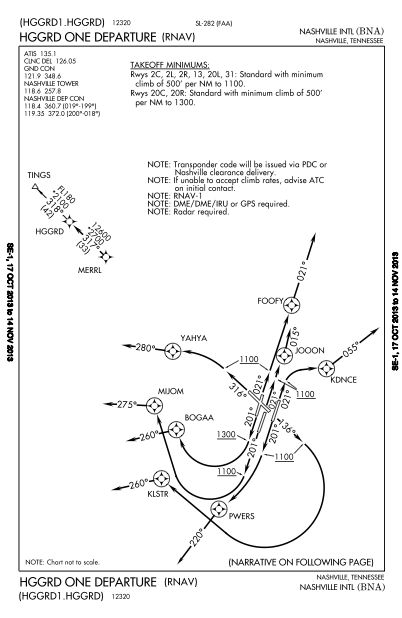
    SID – Standard Instrument Departure


    BNA-Departure.jpg


    SIDs display routes to fly right after takeoff. They help move air traffic efficiently away from the airport. Small airports might have one or two SIDs (or none), while larger airports can have a dozens. Shanghai’s Pudong International has 44 pages of SIDs containing over 100 different departure procedures! Ouch. Fortunately, air traffic control will tell the pilots which procedure they expect them to fly.


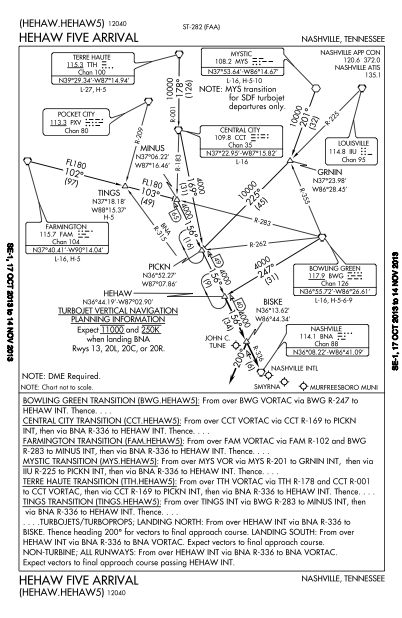
    STAR – Standard Terminal Arrival Routes


    BNA-Arrival.jpg


    STARs enable the pilot to transition from cruise to the approach phase. The STAR route ends about 5-10 miles from the runway. Upon completing the STAR, the pilot will then fly a visual approach to the runway (the pilot can see the runway out the window and doesn’t need any more help from the stinking charts!) or an instrument approach with the help of an “Instrument Approach Procedure” chart. Busy airports almost always make us fly the instrument approach regardless of the weather. It keeps a more orderly flow of traffic.
    Many small airports don’t need STARs. Large airports can have dozens of them. Good old Shanghai has 17 pages of STARs containing over 70 different arrival routes. I get a headache every time I fly there.


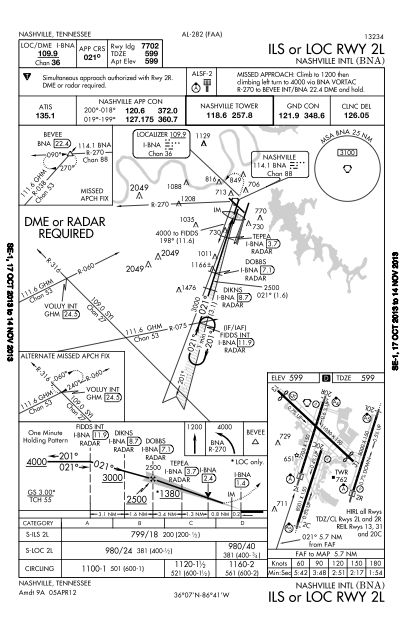
    IAP – Instrument Approach Procedures


    BNA-Approach.jpg


    The IAP chart picks up where the STAR leaves off. It provides the information needed for the flight crew to make an instrument approach and landing on the runway. Some approaches, usually at larger airports, allow specially equipped aircraft (and specially trained crews) to land in extremely low visibility. That’s right – you can’t see your hand in front of your face, but commerce can keep moving!


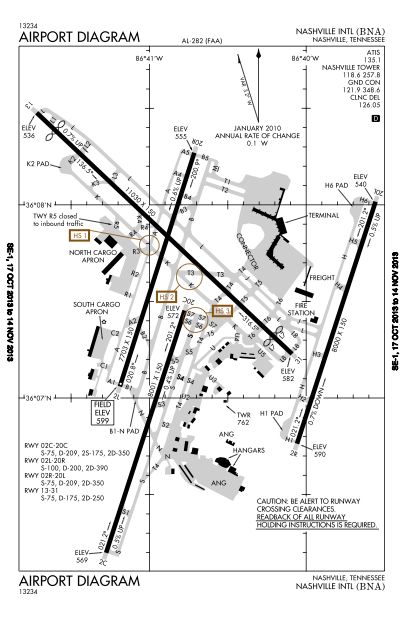
    Airport Diagram


    BNA-Diagram.jpg


    Some airports are really big. And really confusing. Thankfully, the airport diagram helps us find our way. All the taxiways are marked with letters. When the controller wants the pilot to taxi a certain route, the route will be given as a series of phonetic alphabet letters. Like: “Taxi via Bravo, Kilo, Tango4 to the Connector then to gate 23”. It might sound like greek, but if you peek at the Nashville taxi diagram you’ll be able to find taxiway B, K, T4 and the connector. They have signs along the way to help us out as well. Look out your window next time you fly – you’ll see the taxiway signs!


    Odds & Ends

    If you dump everything out of the average pilot’s flight kit, you’ll typically find an assortment of instant coffee, tea, magazines, passport, pilot license, baseball cap, hard candy, and chewing gum (the gum stays in the bag in Singapore). Some of the more unusual stuff I’ve seen pilots carry:

    • A bottle of Tabasco Sauce (more common that you might think) is
    • Pepper grinder
    • I flew with a pilot that carried a small espresso machine in his kit! (his books were in a backpack)
    • Legend has it that a now retired pilot (for an airline I won’t mention) carried a large crystal in his bag to ward off negative energy. He was one strange bird!


    source


    http://aerosavvy.com/the-flight-kit-demystified/

     
    • Like
    Reactions: fakerandi

    fakerandi

    Well-known member
  • Jan 19, 2008
    3,859
    166
    63
    The Flight Kit Demystified!


    splash.jpg


    An authentic airline pilot’s flight kit


    You’ve seen them… Those bags that pilots drag around airport terminals. No, not the suitcases, the smaller, catalog-style bags. What do they keep in those things? And they look pretty heavy, too.
    Well, pull up a chair and get comfy. It’s time to demystify… The Pilot’s Flight Kit.


    [Editor’s Note: Fight kits are quickly being replaced by electronic tablets. Pilot’s still have to carry all the stuff mentioned in this article, but the printed material is in a digital format instead of paper.]
    First off, the kits are heavy; mine weighs about 35 lbs. They are no fun to lug around, but they contain some really important stuff. Almost everything in the bag is required by the FAA. Exceptions include my stash of Halloween candy and a pack of Starbucks Via coffee singles… I’ll share if you’re nice!
    So what’s in the kit? We’ll start with the easy stuff:


    You gotta have a flashlight

    In olden times, the flashlight had to be powered by at least 2 D-cell batteries. This ensured the light would be bright enough to illuminate the cockpit in the event of a power failure at night (a very bad thing). When I started flying professionally in the mid 1980’s, I carried a 3 D-cell Maglite that could double as a self-defense weapon. Thankfully, times have changed. My current light is a small, blindingly bright LED powered by 3 AAA batteries.


    Extra Spectacles

    I’m over 40; way over (but thanks for asking). I need glasses to see – anything. So I’m required to carry an extra pair when I fly. That’s probably a good idea.


    Required Reading

    Most airlines require pilots to carry a thick book with information about the plane they fly. Different companies have different names for the book, but they all contain detailed guidelines on how the company wants you to operate their machine. Airlines are really picky about how you do things when they hand you the keys for a $200 million dollar aircraft. The book is an important in-flight reference.


    Plotter and Computer

    plotter.png


    Ahhhh… These go way back. The circular slide rule thingie is a variant of the classic E-6B computer, affectionately known as the “Whiz-Wheel”. Developed back in the 1930’s, the E-6B can be used for solving just about any type of navigation problem or conversion. It’s a truly amazing device that we must carry for over water flights. When students go through initial flight training (private or military) they become masters of this thing. For me, that was over 30 years ago; I haven’t a clue how to use it now. If I’m ever over the Pacific and things are that bad, I’ll pull out my iPhone and use my freebie E-6B app. The ruler-looking thing is a plotter, nothing more than a glorified staight-edge. It’s great for drawing, uhmm, straight lines.


    Navigation – Do you know the way to San José?
    By far, most of the weight in our flight bags can be blamed on navigation charts. We have a lot of them. If you’re interested in the sordid details with some examples, please read on!


    Enroute Charts

    enroute-charts.jpg

    Albuquerque is in here somewhere.


    Enroute charts are maps that show the highways in the sky. They are used during the cruise portion of the flight to navigate from one part of the country to another. The charts are the same size as a typical road map (does anyone still use a road map?). I’m required to carry about 45 of these. The navigation systems of most modern airliners include much of this information in their database. Occasionally, we’ll need to find something on the chart, so we have them when we need them.


    Terminal Procedure Charts (referred to as “Approach Plates”)


    binder.jpg


    Terminal charts provide pilots with routes for arriving and departing airport terminal areas. Airports often have several arrival and departure routes. Each runway will have one or more instrument approach charts for landing in bad weather. The charts are kept in a 2” thick binder. Pilots usually carry two or three of these heavy binders. Every two weeks, a packet of updates (or “revisions”) are issued and any obsolete charts must be removed and replaced with new ones. This is a task despised by pilots all over the planet. Some guys pay their kids to do it. I think a nickel a page is the going rate.


    Here are the main types of terminal charts we use:


    SID – Standard Instrument Departure


    BNA-Departure.jpg


    SIDs display routes to fly right after takeoff. They help move air traffic efficiently away from the airport. Small airports might have one or two SIDs (or none), while larger airports can have a dozens. Shanghai’s Pudong International has 44 pages of SIDs containing over 100 different departure procedures! Ouch. Fortunately, air traffic control will tell the pilots which procedure they expect them to fly.


    STAR – Standard Terminal Arrival Routes


    BNA-Arrival.jpg


    STARs enable the pilot to transition from cruise to the approach phase. The STAR route ends about 5-10 miles from the runway. Upon completing the STAR, the pilot will then fly a visual approach to the runway (the pilot can see the runway out the window and doesn’t need any more help from the stinking charts!) or an instrument approach with the help of an “Instrument Approach Procedure” chart. Busy airports almost always make us fly the instrument approach regardless of the weather. It keeps a more orderly flow of traffic.
    Many small airports don’t need STARs. Large airports can have dozens of them. Good old Shanghai has 17 pages of STARs containing over 70 different arrival routes. I get a headache every time I fly there.


    IAP – Instrument Approach Procedures


    BNA-Approach.jpg


    The IAP chart picks up where the STAR leaves off. It provides the information needed for the flight crew to make an instrument approach and landing on the runway. Some approaches, usually at larger airports, allow specially equipped aircraft (and specially trained crews) to land in extremely low visibility. That’s right – you can’t see your hand in front of your face, but commerce can keep moving!


    Airport Diagram


    BNA-Diagram.jpg


    Some airports are really big. And really confusing. Thankfully, the airport diagram helps us find our way. All the taxiways are marked with letters. When the controller wants the pilot to taxi a certain route, the route will be given as a series of phonetic alphabet letters. Like: “Taxi via Bravo, Kilo, Tango4 to the Connector then to gate 23”. It might sound like greek, but if you peek at the Nashville taxi diagram you’ll be able to find taxiway B, K, T4 and the connector. They have signs along the way to help us out as well. Look out your window next time you fly – you’ll see the taxiway signs!


    Odds & Ends

    If you dump everything out of the average pilot’s flight kit, you’ll typically find an assortment of instant coffee, tea, magazines, passport, pilot license, baseball cap, hard candy, and chewing gum (the gum stays in the bag in Singapore). Some of the more unusual stuff I’ve seen pilots carry:

    • A bottle of Tabasco Sauce (more common that you might think) is
    • Pepper grinder
    • I flew with a pilot that carried a small espresso machine in his kit! (his books were in a backpack)
    • Legend has it that a now retired pilot (for an airline I won’t mention) carried a large crystal in his bag to ward off negative energy. He was one strange bird!


    source


    http://aerosavvy.com/the-flight-kit-demystified/


    :cool::cool::cool:
     

    fakerandi

    Well-known member
  • Jan 19, 2008
    3,859
    166
    63
    ahh boss moko wenne ? dan wadiya pennath naa ne.ape
    aviation lovers la tika th busy wela wage thread ekath nikan slow
    wela wage ko lagadi A380 k wath awe naa :baffled: ne ehanam thead eka
    duwanawa jet fuel gahuwa wage :lol::lol::lol:

    haha ekane macho. mama nam hama daama thread eke awilla check karanawa kawuruth monawa hari daalada kiala. ara virgin atlantic eke tv series eka uba balanawada? ara meke post karala thibbe
     

    Hashan dis

    Well-known member
  • Sep 10, 2008
    15,010
    657
    113
    haha ekane macho. mama nam hama daama thread eke awilla check karanawa kawuruth monawa hari daalada kiala. ara virgin atlantic eke tv series eka uba balanawada? ara meke post karala thibbe

    ah ne machan balanna bari una DATA case thamai :(
    parisamen use karalath maase end wenna kalin data tika iwarai
    dayyane kiyala google loon eka wath hari giyoth nam loku dayak.
    Rochel neda daala tibbe aluth episodes awith nedda :confused:
     

    fakerandi

    Well-known member
  • Jan 19, 2008
    3,859
    166
    63
    ah ne machan balanna bari una DATA case thamai :(
    parisamen use karalath maase end wenna kalin data tika iwarai
    dayyane kiyala google loon eka wath hari giyoth nam loku dayak.
    Rochel neda daala tibbe aluth episodes awith nedda :confused:

    naa ne macho. :( hama thanama hewwa. ado dan me maase patan gattha withrai ne bung. occhara ikmanata iwara wunada?:shocked:
     

    uvajira

    Well-known member
  • Jul 22, 2006
    1,967
    212
    63
    London
    niyamai machan meka kochara uda yawanna puluwan da ?
    price eka keeyak wage unada sira look ekak tiyanawa :yes:


    Me tiyenne machan specifications eka,Thama mama godak udata fly kare ne ban purudu neti nisa.Youtube Video nam tiyanawa oka godak uda video karala tiyana ewa."Xiro Explorer V" kiyala search karapan ko.

    Descritption:
    Brand name: Zero tech
    Item name: Explorer Xplorer Vision RC quadcopter
    Battery: 5200mAh LiPo Smart battery

    Quadcopter:
    Ready to fly right out of box. No DIY needed
    Up to 16 point ground station br function support
    Advanced flight control system
    Up to 25 min flight time
    Two angle landing feet, easy to carry
    On-screen real-time flight parameters
    Radar position lock and auto return home

    Transmitter:
    5.8G Remote controller
    3 different flight level including beginner mode
    Bulit-In Wi-Fi Ranger Extender For up To 800 Meter Camera Preview
    Built-in 2.4G WiFi graphic transmitter for video preview
    Vibration Alert
    Retractable Multi-angle mobilephone holder

    Gimbal:
    Detachable 3-axial stabilized gimbal
    Built-in 2.4G WiFi graphic transmitter for video preview

    Camera:
    High Performance HD Camera
    1080p 30 or 720p 60 crystal clear video recording
    14M pixels photo shooting
    Adobe RAW support
    Remote Camera parameter setting and Album sychronization
     

    kmc madushan

    Well-known member
  • Feb 20, 2011
    23,883
    2,103
    113
    LK
    The Flight Kit Demystified!


    splash.jpg


    An authentic airline pilot’s flight kit


    You’ve seen them… Those bags that pilots drag around airport terminals. No, not the suitcases, the smaller, catalog-style bags. What do they keep in those things? And they look pretty heavy, too.
    Well, pull up a chair and get comfy. It’s time to demystify… The Pilot’s Flight Kit.


    [Editor’s Note: Fight kits are quickly being replaced by electronic tablets. Pilot’s still have to carry all the stuff mentioned in this article, but the printed material is in a digital format instead of paper.]
    First off, the kits are heavy; mine weighs about 35 lbs. They are no fun to lug around, but they contain some really important stuff. Almost everything in the bag is required by the FAA. Exceptions include my stash of Halloween candy and a pack of Starbucks Via coffee singles… I’ll share if you’re nice!
    So what’s in the kit? We’ll start with the easy stuff:


    You gotta have a flashlight

    In olden times, the flashlight had to be powered by at least 2 D-cell batteries. This ensured the light would be bright enough to illuminate the cockpit in the event of a power failure at night (a very bad thing). When I started flying professionally in the mid 1980’s, I carried a 3 D-cell Maglite that could double as a self-defense weapon. Thankfully, times have changed. My current light is a small, blindingly bright LED powered by 3 AAA batteries.


    Extra Spectacles

    I’m over 40; way over (but thanks for asking). I need glasses to see – anything. So I’m required to carry an extra pair when I fly. That’s probably a good idea.


    Required Reading

    Most airlines require pilots to carry a thick book with information about the plane they fly. Different companies have different names for the book, but they all contain detailed guidelines on how the company wants you to operate their machine. Airlines are really picky about how you do things when they hand you the keys for a $200 million dollar aircraft. The book is an important in-flight reference.


    Plotter and Computer

    plotter.png


    Ahhhh… These go way back. The circular slide rule thingie is a variant of the classic E-6B computer, affectionately known as the “Whiz-Wheel”. Developed back in the 1930’s, the E-6B can be used for solving just about any type of navigation problem or conversion. It’s a truly amazing device that we must carry for over water flights. When students go through initial flight training (private or military) they become masters of this thing. For me, that was over 30 years ago; I haven’t a clue how to use it now. If I’m ever over the Pacific and things are that bad, I’ll pull out my iPhone and use my freebie E-6B app. The ruler-looking thing is a plotter, nothing more than a glorified staight-edge. It’s great for drawing, uhmm, straight lines.


    Navigation – Do you know the way to San José?
    By far, most of the weight in our flight bags can be blamed on navigation charts. We have a lot of them. If you’re interested in the sordid details with some examples, please read on!


    Enroute Charts

    enroute-charts.jpg

    Albuquerque is in here somewhere.


    Enroute charts are maps that show the highways in the sky. They are used during the cruise portion of the flight to navigate from one part of the country to another. The charts are the same size as a typical road map (does anyone still use a road map?). I’m required to carry about 45 of these. The navigation systems of most modern airliners include much of this information in their database. Occasionally, we’ll need to find something on the chart, so we have them when we need them.


    Terminal Procedure Charts (referred to as “Approach Plates”)


    binder.jpg


    Terminal charts provide pilots with routes for arriving and departing airport terminal areas. Airports often have several arrival and departure routes. Each runway will have one or more instrument approach charts for landing in bad weather. The charts are kept in a 2” thick binder. Pilots usually carry two or three of these heavy binders. Every two weeks, a packet of updates (or “revisions”) are issued and any obsolete charts must be removed and replaced with new ones. This is a task despised by pilots all over the planet. Some guys pay their kids to do it. I think a nickel a page is the going rate.


    Here are the main types of terminal charts we use:


    SID – Standard Instrument Departure


    BNA-Departure.jpg


    SIDs display routes to fly right after takeoff. They help move air traffic efficiently away from the airport. Small airports might have one or two SIDs (or none), while larger airports can have a dozens. Shanghai’s Pudong International has 44 pages of SIDs containing over 100 different departure procedures! Ouch. Fortunately, air traffic control will tell the pilots which procedure they expect them to fly.


    STAR – Standard Terminal Arrival Routes


    BNA-Arrival.jpg


    STARs enable the pilot to transition from cruise to the approach phase. The STAR route ends about 5-10 miles from the runway. Upon completing the STAR, the pilot will then fly a visual approach to the runway (the pilot can see the runway out the window and doesn’t need any more help from the stinking charts!) or an instrument approach with the help of an “Instrument Approach Procedure” chart. Busy airports almost always make us fly the instrument approach regardless of the weather. It keeps a more orderly flow of traffic.
    Many small airports don’t need STARs. Large airports can have dozens of them. Good old Shanghai has 17 pages of STARs containing over 70 different arrival routes. I get a headache every time I fly there.


    IAP – Instrument Approach Procedures


    BNA-Approach.jpg


    The IAP chart picks up where the STAR leaves off. It provides the information needed for the flight crew to make an instrument approach and landing on the runway. Some approaches, usually at larger airports, allow specially equipped aircraft (and specially trained crews) to land in extremely low visibility. That’s right – you can’t see your hand in front of your face, but commerce can keep moving!


    Airport Diagram


    BNA-Diagram.jpg


    Some airports are really big. And really confusing. Thankfully, the airport diagram helps us find our way. All the taxiways are marked with letters. When the controller wants the pilot to taxi a certain route, the route will be given as a series of phonetic alphabet letters. Like: “Taxi via Bravo, Kilo, Tango4 to the Connector then to gate 23”. It might sound like greek, but if you peek at the Nashville taxi diagram you’ll be able to find taxiway B, K, T4 and the connector. They have signs along the way to help us out as well. Look out your window next time you fly – you’ll see the taxiway signs!


    Odds & Ends

    If you dump everything out of the average pilot’s flight kit, you’ll typically find an assortment of instant coffee, tea, magazines, passport, pilot license, baseball cap, hard candy, and chewing gum (the gum stays in the bag in Singapore). Some of the more unusual stuff I’ve seen pilots carry:

    • A bottle of Tabasco Sauce (more common that you might think) is
    • Pepper grinder
    • I flew with a pilot that carried a small espresso machine in his kit! (his books were in a backpack)
    • Legend has it that a now retired pilot (for an airline I won’t mention) carried a large crystal in his bag to ward off negative energy. He was one strange bird!


    source


    http://aerosavvy.com/the-flight-kit-demystified/


    good post machan :):)
     

    Local Disk (c:)

    Well-known member
  • Apr 13, 2011
    4,194
    236
    63
    A320 Hanger
    The Flight Kit Demystified!


    splash.jpg


    An authentic airline pilot’s flight kit


    You’ve seen them… Those bags that pilots drag around airport terminals. No, not the suitcases, the smaller, catalog-style bags. What do they keep in those things? And they look pretty heavy, too.
    Well, pull up a chair and get comfy. It’s time to demystify… The Pilot’s Flight Kit.


    [/LEFT]

    patta wisthara tika :):)
    ahh boss moko wenne ? dan wadiya pennath naa ne.ape
    aviation lovers la tika th busy wela wage thread ekath nikan slow
    wela wage ko lagadi A380 k wath awe naa :baffled: ne ehanam thead eka
    duwanawa jet fuel gahuwa wage :lol::lol::lol:

    sahena busy una bn..monday exam..4n eken awith oluwa dala yanawa..:(:(