


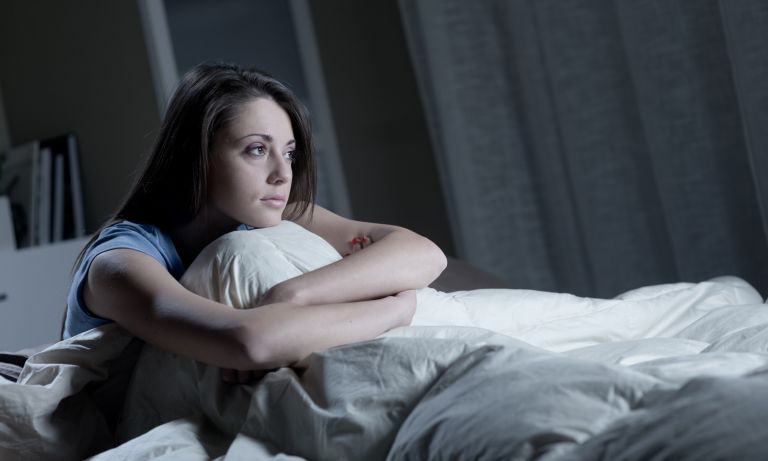
What is a sleep disorder or sleep problem?
A sleep disorder is a condition that frequently impacts your ability to get enough quality sleep. Many of us occasionally experience difficulties sleeping. Usually, it’s due to stress, travel, illness, or other temporary interruptions to your normal routine. However, if you regularly have problems getting to sleep at night, wake up feeling exhausted, or feel sleepy during the day, you may be suffering from a sleep disorder.Sleep disorders cause more than just daytime sleepiness. They can take a serious toll on your mental and physical health, including your mood, energy, and ability to handle stress. Ignoring sleep problems and disorders can lead to weight gain, car accidents, impaired job performance, memory problems, and strained relationships. If you want to feel your best, stay healthy, and perform up to your potential, quality sleep is a necessity, not a luxury.
Frequently having trouble sleeping can be a frustrating and debilitating experience. You sleep badly at night, which leaves you feeling dead-tired in the morning and whatever energy you have quickly drained throughout the day. But then, no matter how exhausted you feel at night, you still have trouble sleeping. And so the cycle begins again. But you don’t have to live with a sleeping problem. There are many things you can do to identify the underlying causes of your sleep disorder and improve your sleep, health, and quality of life.
Signs and symptoms of a sleep disorder
Everyone experiences occasional sleeping problems, so how can you tell whether your difficulty is just a minor, passing annoyance or a sign of a more serious sleep disorder or underlying medical condition?Start by scrutinizing your symptoms, looking especially for the telltale daytime signs of sleep deprivation.
Is it a sleep disorder?
Do you:- Feel irritable or sleepy during the day?
- Have difficulty staying awake when sitting still, watching television or reading?
- Fall asleep or feel very tired while driving?
- Have difficulty concentrating?
- Often get told by others that you look tired?
- React slowly?
- Have trouble controlling your emotions?
- Feel like you have to take a nap almost every day?
- require caffeinated beverages to keep yourself going?
Types of common sleep disorders

Insomnia
Insomnia, the inability to get to sleep or sleep well at night, can be caused by stress, jet lag, a health condition, the medications you take, or even the amount of coffee you drink. Insomnia can also be caused by other sleep disorders or mood disorders such as anxiety and depression.Whatever the cause of your insomnia, improving your sleep hygiene, revising your daytime habits, and learning to relax will help cure most cases of insomnia without relying on sleep specialists or turning to prescription or over-the-counter sleeping pills.
Sleep apnea
Sleep apnea is a common (and treatable) sleep disorder in which your breathing temporarily stops during sleep, awakening you frequently. If you have sleep apnea you may not remember these awakenings, but you’ll likely feel exhausted during the day, irritable and depressed, or see a decrease in your productivity. Sleep apnea is a serious and potentially life-threatening sleep disorder, so see a doctor right away and learn how to help yourself.Restless legs syndrome (RLS)
Restless legs syndrome (RLS) is a sleep disorder that causes an almost irresistible urge to move your legs (or arms) at night. The urge to move occurs when you’re resting or lying down and is usually due to uncomfortable, tingly, aching, or creeping sensations. There are plenty of ways to help manage and relieve symptoms, though, including self-help remedies you can use at home.Narcolepsy
Narcolepsy is a sleep disorder that involves excessive, uncontrollable daytime sleepiness. It is caused by a dysfunction of the brain mechanism that controls sleeping and waking. If you have narcolepsy, you may have “sleep attacks” in the middle of talking, working, or even driving. Although no cure yet exists, a combination of treatments can help control symptoms and enable you to enjoy many normal activities.Circadian rhythm sleep disorders

We all have an internal biological clock that regulates our 24-hour sleep-wake cycle, also known as our circadian rhythms. Light is the primary cue that influences circadian rhythms. At night, when there is less light, your brain triggers the release of melatonin, a hormone that makes you sleepy. When the sun comes up in the morning, the brain tells the body that it’s time to wake up.
When your circadian rhythms are disrupted or thrown off, you may feel groggy, disoriented, and sleepy at inconvenient times. Circadian rhythms have been linked to a variety of sleeping problems and sleep disorders, as well as depression, bipolar disorder, and seasonal affective disorder (the winter blues).
Shift work sleep disorder
Shift work sleep disorder occurs when your work schedule and your biological clock are out of sync. In our 24-hour society, many people have to work night shifts, early morning shifts, or rotating shifts. These schedules force you to work when your body is telling you to go to sleep and sleep when your body is signalling you to wake.While some people adjust better than others to the demands of shift work, most shift workers get less quality sleep than their daytime counterparts. As a result of sleep deprivation, you may struggle with sleepiness and mental lethargy on the job. This cuts into your productivity and puts you at risk of injury.
To reduce the impact of shift work on your sleep:
- Take regular breaks and minimize the frequency of shift changes.
- When changing shifts, request a shift that’s later, rather than earlier as it’s easier to adjust forward in time, rather than backward.
- Naturally, regulate your sleep-wake cycle by increasing light exposure at work (use bright lights) and limiting light exposure when it’s time to sleep. Avoid TV and computer screens, and use blackout shades or heavy curtains to block out daylight in your bedroom.
- Consider taking melatonin when it’s time for you to sleep.
Delayed sleep phase disorder
Delayed sleep phase disorder is a condition where your biological clock is significantly delayed. As a result, you go to sleep and wake up much later than other people. This is more than just a preference for staying up late or being a night owl, but rather a disorder that makes it difficult for you to keep normal hours—to make it to morning classes, get the kids to school on time, or keep a 9-to-5 job.- People with delayed sleep phase disorder are unable to get to sleep earlier than 2 to 6 a.m., no matter how hard they try.
- When allowed to keep their own hours (such as during a school break or vacation), they fall into a regular sleep schedule.
- Delayed sleep phase disorder is most common in teenagers, and many teens will eventually grow out of it.
- For those who continue to struggle with a biological clock that is out of sync, treatments such as light therapy and chronotherapy can help. To learn more, schedule an appointment with your doctor or a local sleep clinic.
Jet lag
Jet lag is a temporary disruption in circadian rhythms that occurs when you travel across time zones. Symptoms include daytime sleepiness, fatigue, headaches, stomach problems, and insomnia. Symptoms are more pronounced the longer the flight and flying east tend to cause worse jet lag than flying west.In general, it usually takes one day per time zone crossed to adjust to the local time. So, if you flew from Los Angeles to New York, crossing three time zones, your jet lag should be gone within three days.


