Most Expensive Materials in World

gayankuwait

Well-known member
  • Oct 13, 2010
    56,348
    4,726
    113

    mila ganan tikak ehe mehe yanna puluwan :(

    18aff744aa.jpg


    cc0b2a9754.jpg


    261508b8d6.jpg


    f9d3f50a06.jpg


    212c702879.jpg


    1958c20358.jpg


    8f2fffa12f.jpg


    4b5558b652.jpg


    3c360dc706.jpg


    d68a4110c1.jpg


    5df8040007.jpg


    3eaa21be9f.jpg


    a6135d8b41.jpg


    8602b87f51.jpg


    4e9eeedc54.jpg


    21cb237a7e.jpg


    Code:
    mynic_dip
     

    මම කට්ටා

    Well-known member
  • May 12, 2012
    6,519
    934
    113
    මේ මොකක්ද බන්zzzzz.... මේ දාලා තියෙන්නේ ග්‍රෑම් එකක් මිලද කියලා පොඩ්ඩක් කිව්වනම්
     

    gayankuwait

    Well-known member
  • Oct 13, 2010
    56,348
    4,726
    113
    මම කට්ටා;13021775 said:
    මේ මොකක්ද බන්zzzzz.... මේ දාලා තියෙන්නේ ග්‍රෑම් එකක් මිලද කියලා පොඩ්ඩක් කිව්වනම්
    :yes::nerd:
     

    wisal

    Member
    Jul 2, 2009
    7,624
    759
    0
    Israel
    Saffron (pronounced /ˈsæfrɒn/) is a spice derived from the flower of Crocus sativus, commonly known as the saffron crocus. Crocus is a genus in the family Iridaceae. Each saffron crocus grows to 20–30 cm (8–12 in) and bears up to four flowers, each with three vivid crimson stigmas, which are each the distal end of a carpel.[1] Together with the styles, or stalks that connect the stigmas to their host plant, the dried stigmas are used mainly in various cuisines as a seasoning and colouring agent. Saffron, long among the world's most costly spices by weight,[2][3] is native to Southwest Asia[4][3] and was first cultivated in Greece.[5] As a genetically monomorphic clone,[6] it was slowly propagated throughout much of Eurasia and was later brought to parts of North Africa, North America, and Oceania.
    220px-Saffran_crocus_sativus_moist.jpg


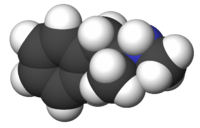
    Methamphetamine (USAN) ( /ˌmɛθæmˈfɛtəmiːn/), also known as metamfetamine (INN),[2] meth, glass, tik, N-methylamphetamine, methylamphetamine, and desoxyephedrine, is a psychostimulant of the phenethylamine and amphetamine class of psychoactive drugs.
    Methamphetamine increases alertness, concentration, energy, and in high doses, can induce euphoria, enhance self-esteem and increase libido.[3][4] Methamphetamine has high potential for abuse and addiction, activating the psychological reward system by triggering a cascading release of dopamine in the brain. Methamphetamine is FDA approved for the treatment of ADHD and exogenous obesity. It is dispensed in the USA under the trademark name Desoxyn[5] and manufactured by Ovation Pharmaceuticals which was purchased in 2009 by Danish pharmaceutical Lundbeck.[6]
    As a result of methamphetamine-induced neurotoxicity to dopaminergic neurons, chronic abuse may also lead to post-withdrawal syndrome which persist beyond the withdrawal period for months, and even up to a year.[7] A study performed on female Japanese prison inmates suffering from methamphetamine addiction showed 20% experienced a psychosis resembling schizophrenia which persisted for longer than six months post-methamphetamine use; this amphetamine psychosis can be resistant to traditional treatment.[8] In addition to psychological harm, physical harm – primarily consisting of cardiovascular damage – may occur with chronic use or acute overdose.[9]
    200px-Methamphetamine-3d-CPK.png


    උබ මේක දාපු ගමන් කට්ටිය හොයනවනේ සෆරොන් කියන්නේ මොනාද කියලා.. ඉතින් මම ඒක දැම්මා
     
    Last edited:
    • Like
    Reactions: geethq

    gayankuwait

    Well-known member
  • Oct 13, 2010
    56,348
    4,726
    113
    Saffron (pronounced /ˈsæfrɒn/) is a spice derived from the flower of Crocus sativus, commonly known as the saffron crocus. Crocus is a genus in the family Iridaceae. Each saffron crocus grows to 20–30 cm (8–12 in) and bears up to four flowers, each with three vivid crimson stigmas, which are each the distal end of a carpel.[1] Together with the styles, or stalks that connect the stigmas to their host plant, the dried stigmas are used mainly in various cuisines as a seasoning and colouring agent. Saffron, long among the world's most costly spices by weight,[2][3] is native to Southwest Asia[4][3] and was first cultivated in Greece.[5] As a genetically monomorphic clone,[6] it was slowly propagated throughout much of Eurasia and was later brought to parts of North Africa, North America, and Oceania.
    220px-Saffran_crocus_sativus_moist.jpg


    Methamphetamine (USAN) ( /ˌmɛθæmˈfɛtəmiːn/), also known as metamfetamine (INN),[2] meth, glass, tik, N-methylamphetamine, methylamphetamine, and desoxyephedrine, is a psychostimulant of the phenethylamine and amphetamine class of psychoactive drugs.
    Methamphetamine increases alertness, concentration, energy, and in high doses, can induce euphoria, enhance self-esteem and increase libido.[3][4] Methamphetamine has high potential for abuse and addiction, activating the psychological reward system by triggering a cascading release of dopamine in the brain. Methamphetamine is FDA approved for the treatment of ADHD and exogenous obesity. It is dispensed in the USA under the trademark name Desoxyn[5] and manufactured by Ovation Pharmaceuticals which was purchased in 2009 by Danish pharmaceutical Lundbeck.[6]
    As a result of methamphetamine-induced neurotoxicity to dopaminergic neurons, chronic abuse may also lead to post-withdrawal syndrome which persist beyond the withdrawal period for months, and even up to a year.[7] A study performed on female Japanese prison inmates suffering from methamphetamine addiction showed 20% experienced a psychosis resembling schizophrenia which persisted for longer than six months post-methamphetamine use; this amphetamine psychosis can be resistant to traditional treatment.[8] In addition to psychological harm, physical harm – primarily consisting of cardiovascular damage – may occur with chronic use or acute overdose.[9]
    200px-Methamphetamine-3d-CPK.png


    උබ මේක දාපු ගමන් කට්ටිය හොයනවනේ සෆරොන් කියන්නේ මොනාද කියලා.. ඉතින් මම ඒක දැම්මා
    ah ela
     

    wisal

    Member
    Jul 2, 2009
    7,624
    759
    0
    Israel
    Lysergic acid diethylamide, abbreviated LSD or LSD-25, also known as lysergide and colloquially as acid, is a semisynthetic psychedelic drug of the ergoline family, well known for its psychological effects which can include altered thinking processes, closed and open eye visuals, synaesthesia, an altered sense of time and spiritual experiences, as well as for its key role in 1960s counterculture. It is used mainly as an entheogen, recreational drug, and as an agent in psychedelic therapy. LSD is non-addictive, is not known to cause brain damage, and has extremely low toxicity relative to dose, although in rare cases adverse psychiatric reactions such as anxiety or delusions are possible.[3]
    LSD was first synthesized by Albert Hofmann in 1938 from ergotamine, a chemical derived by Arthur Stoll from ergot, a grain fungus that typically grows on rye. The short form "LSD" comes from its early code name LSD-25, which is an abbreviation for the German "Lysergsäure-diethylamid" followed by a sequential number.[4][5] LSD is sensitive to oxygen, ultraviolet light, and chlorine, especially in solution, though its potency may last for years if it is stored away from light and moisture at low temperature. In pure form it is a colorless, odorless, and mildly bitter solid.[6] LSD is typically delivered orally, usually on a substrate such as absorbent blotter paper, a sugar cube, or gelatin. In its liquid form, it can also be administered by intramuscular or intravenous injection. LSD is very potent, with 20–30 µg (micrograms) being the threshold dose. New experiments with LSD have started in 2009 for the first time in 40 years. [7]
    Introduced by Sandoz Laboratories, with trade-name Delysid, as a drug with various psychiatric uses in 1947, LSD quickly became a therapeutic agent that appeared to show great promise.[8] In the 1950s, officials at the U.S. Central Intelligence Agency (CIA) thought the drug might be applicable to mind control and chemical warfare; the agency's MKULTRA research program propagated the drug among young servicemen and students. The subsequent recreational use of the drug by youth culture in the Western world during the 1960s led to a political firestorm that resulted in its prohibition.[9] Currently, a number of organizations—including the Beckley Foundation, MAPS, Heffter Research Institute and the Albert Hofmann Foundation—exist to fund, encourage and coordinate research into the medicinal and spiritual uses of LSD and related psychedelics.[10]
    350px-LSD-2D-skeletal-formula-and-3D-models.png

    උපුටා ගැනීම වීකි...

    Painite is a very rare Borate mineral. It was first found in Myanmar by British mineralogist and gem dealer Arthur C.D. Pain in the 1950s. When it was confirmed as a new mineral species, the mineral was named after him.[2]
    The chemical makeup of painite contains calcium, zirconium, boron, aluminium and oxygen (CaZrAl9O15(BO3)). The mineral also contains trace amounts of chromium and vanadium. Painite has an orange-red to brownish-red color similar to topaz due to trace amounts of iron. The crystals are naturally hexagonal in shape, and, until late 2004, only two had been cut into faceted gemstones
    240px-Painite2.jpg
     
    Last edited: