
Latest ads
-
 ඔයාගෙ Assignment හෝ Thesis එක හරියට හදාගමු
- ErMurazor
- Updated:
-
BlackWall V2ray servers
- hu KANNA
- Updated:
-
 Peppa Pig Family Plush Toy Set – 5 Characters
- anil1961
- Updated:
-
Express VPN PC - 1 Year Rs. 600.00
- Sanathbh
- Updated:
-
Capcut Pro 7 Days Team Plan - Rs. 3️⃣0️⃣0️⃣
- Sanathbh
- Updated:
You are using an out of date browser. It may not display this or other websites correctly.
You should upgrade or use an alternative browser.
You should upgrade or use an alternative browser.


sharaz, Masha Allah....thank you very much.... may allah bless you.
i'd like to add some thing here, onec i downloaded some samll mp3 files from the net... its telling how to pronounce the letters... wit examples. if you can fined out and publis here... it'll be much ez for biginers i guess
i'd like to add some thing here, onec i downloaded some samll mp3 files from the net... its telling how to pronounce the letters... wit examples. if you can fined out and publis here... it'll be much ez for biginers i guess
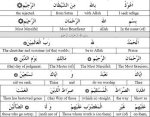


[FONT="]1.[/FONT][FONT="]The Mechanism of the formation of letters [/FONT]
[FONT="]The Qur’an consists of 114 surahs; each surah consists of a number of aayat; each aayah consists of a number of words, and each word consists of different letters. We can therefore state that the smallest unit in the make-up of the Qur’an is the letter. [/FONT]
[FONT="]Scholars studied letters from the standpoint of articulation points and characteristics of the letters when pronouncing a letter. If the Qur’an reader pronounces each letter from its proper articulation point, with all of each letter’s characteristics, and can read each letter properly alone, and in conjunction with other words, he then has achieved high quality in reading the Qur’an.[/FONT]
[FONT="]The definition of letter:[/FONT] [FONT="] It is a sound that depends on a defined part or an approximate part (of articulation).
To understand the definition of a letter we need to understand what sound is.[/FONT]
[FONT="]The Definition of sound:[/FONT] [FONT="] It is vibration and waves in the layers of air that reaches the human ears. If the air vibrates with a vibration that reaches human hearing levels, then this vibration is called sound.[/FONT]
[FONT="]Human ears hear sound in the range of 20-20,000 hertz. A hertz is vibrations per second. If the frequency of sound vibrations is higher or lower than this we cannot hear it. An example of this is ultrasound. Air vibrates normally in nature in many ways, four different ways that can produce audible waves are: [/FONT]
[FONT="]Human articulation uses some of the previous mentioned methods of causing sound in voweled and non-voweled letters. The following explains how the sound of the letters is formed in human articulation. [/FONT]
[FONT="] 1. Non-Voweled letters [/FONT]
[FONT="] A. It occurs by the collision ( ) of two components of the articulation parts. There is no accompanying jaw or mouth movement that occurs with voweled letters. This is for all non-voweled letters except the medd and leen letters, and the qalqalah letters. An example is . The meem occurs by collision of the two lips. [/FONT]
[FONT="] B. It occurs by vibration of the vocal cords in the throat and does not occur by a collision between two components the articulation parts. This is only for the medd and leen letters (when there is a medd leen). The medd and leen letters (when there is a medd leen) do have accompanying movement of the mouth and jaw. The lengthened alif is accompanied by the opening of the mouth. The lengthened is accompanied by a circling of the lips. The lengthened is accompanied by the lowering of the jaw. An example can be found in the two joined words or the word . The sound of the medd letters comes from vibration of the vocal cords, with the accompanying mouth and jaw movement. [/FONT]
[FONT="]2. Voweled letters [/FONT]
[FONT="]Voweled letters occur by the parting ( ) of two components of the articulating parts. The sound of all letters occurs like this when voweled. Accompanying the parting of the articulation bodies is the appropriate mouth and jaw movements for the written vowel. [/FONT]
[FONT="] a) Opening of the mouth. This occurs with a fat-h [/FONT]
[FONT="] b) Circling of the lips. This happens with a dhammah. [/FONT]
[FONT="] c) Lowering of the jaw. This happens with a kasrah. [/FONT]
[FONT="]An example is in the following[/FONT] [FONT="]: [/FONT]
[FONT="] (BA) occurs by the separation of the two lips and the opening of the mouth.
(BU) occurs by the separation of the two lips and the circling of the lips.
(BI) occurs by the separation of the two lips and the lowering of the bottom jaw. [/FONT]
[FONT="]
All vowels must sound like a shortened version of its origin. The alif is the origin of the fat-h, the long is the origin of the dhammah, and the long is the origin of the kasrah. The reader must be careful not to pronounce these vowels incorrectly, such as when the kasrah is pronounced in between a kasrah and a
fat-hah. Some readers mistakenly open the sides of the mouth for a fat-hah instead of opening the mouth vertically; the result of this mistake is called imaalah, which means tilting. Other readers do not make a complete circle of their lips for a dhammah and the resulting sound is like that of the English “O”. Another mistake readers may make is not lowering the jaw completely for the kasrah, and the resulting sound is that of a short i. We should not let our mouths be lazy; the correct way of pronouncing vowels need more mouth and jaw action than the incorrect way. The vowel and letter formation is one of the most important items of research in the knowledge of tajweed because it is linked to all 29 letters of Arabic. We must be careful to pronounce these vowel sounds correctly and at the same time be careful not to put a vowel on a saakinah letter. For example the word: The has a dhammah, the a sukoon, the second a dhammah, and the a sukoon. We have to be sure to say the dhammah on the , then return our mouths to a neutral position for the , then make a dhammah for the second , then back to a neutral position for the . This takes practice in the mirror to accomplish the mouth movement in the proper sequence. The most common mistake in a word like this is leaving the mouth in a dhammah for the letters that have a sukoon on them. The resultant sound is like half a dhammah instead of the pure sukoon sound required. This is even more pertinent with the letter is a qalqalah letter, such as is the case of the when it has a sukoon on it. The qalqalah should have no vowel sound accompanying it. The mechanism of the qalqalah will be covered in future tidbit lessons, insha’ Allah.[/FONT]
[FONT="]The Qur’an consists of 114 surahs; each surah consists of a number of aayat; each aayah consists of a number of words, and each word consists of different letters. We can therefore state that the smallest unit in the make-up of the Qur’an is the letter. [/FONT]
[FONT="]Scholars studied letters from the standpoint of articulation points and characteristics of the letters when pronouncing a letter. If the Qur’an reader pronounces each letter from its proper articulation point, with all of each letter’s characteristics, and can read each letter properly alone, and in conjunction with other words, he then has achieved high quality in reading the Qur’an.[/FONT]
[FONT="]The definition of letter:[/FONT] [FONT="] It is a sound that depends on a defined part or an approximate part (of articulation).
To understand the definition of a letter we need to understand what sound is.[/FONT]
[FONT="]The Definition of sound:[/FONT] [FONT="] It is vibration and waves in the layers of air that reaches the human ears. If the air vibrates with a vibration that reaches human hearing levels, then this vibration is called sound.[/FONT]
[FONT="]Human ears hear sound in the range of 20-20,000 hertz. A hertz is vibrations per second. If the frequency of sound vibrations is higher or lower than this we cannot hear it. An example of this is ultrasound. Air vibrates normally in nature in many ways, four different ways that can produce audible waves are: [/FONT]
- [FONT="]Strong collision of two bodies. An example of this is clapping of the hands. [/FONT]
- [FONT="]Parting of two bodies from each other, and between them there is a strong bond. An example of this is tearing paper. [/FONT]
- [FONT="]Vibration of a body. For example, a tuning fork. [/FONT]
- [FONT="]Strong friction of an object on another object. This could be exemplified by dragging a heavy box on asphalt. [/FONT]
[FONT="]Human articulation uses some of the previous mentioned methods of causing sound in voweled and non-voweled letters. The following explains how the sound of the letters is formed in human articulation. [/FONT]
[FONT="] 1. Non-Voweled letters [/FONT]
[FONT="] A. It occurs by the collision ( ) of two components of the articulation parts. There is no accompanying jaw or mouth movement that occurs with voweled letters. This is for all non-voweled letters except the medd and leen letters, and the qalqalah letters. An example is . The meem occurs by collision of the two lips. [/FONT]
[FONT="] B. It occurs by vibration of the vocal cords in the throat and does not occur by a collision between two components the articulation parts. This is only for the medd and leen letters (when there is a medd leen). The medd and leen letters (when there is a medd leen) do have accompanying movement of the mouth and jaw. The lengthened alif is accompanied by the opening of the mouth. The lengthened is accompanied by a circling of the lips. The lengthened is accompanied by the lowering of the jaw. An example can be found in the two joined words or the word . The sound of the medd letters comes from vibration of the vocal cords, with the accompanying mouth and jaw movement. [/FONT]
[FONT="]2. Voweled letters [/FONT]
[FONT="]Voweled letters occur by the parting ( ) of two components of the articulating parts. The sound of all letters occurs like this when voweled. Accompanying the parting of the articulation bodies is the appropriate mouth and jaw movements for the written vowel. [/FONT]
[FONT="] a) Opening of the mouth. This occurs with a fat-h [/FONT]
[FONT="] b) Circling of the lips. This happens with a dhammah. [/FONT]
[FONT="] c) Lowering of the jaw. This happens with a kasrah. [/FONT]
[FONT="]An example is in the following[/FONT] [FONT="]: [/FONT]
[FONT="] (BA) occurs by the separation of the two lips and the opening of the mouth.
(BU) occurs by the separation of the two lips and the circling of the lips.
(BI) occurs by the separation of the two lips and the lowering of the bottom jaw. [/FONT]
[FONT="]
All vowels must sound like a shortened version of its origin. The alif is the origin of the fat-h, the long is the origin of the dhammah, and the long is the origin of the kasrah. The reader must be careful not to pronounce these vowels incorrectly, such as when the kasrah is pronounced in between a kasrah and a
fat-hah. Some readers mistakenly open the sides of the mouth for a fat-hah instead of opening the mouth vertically; the result of this mistake is called imaalah, which means tilting. Other readers do not make a complete circle of their lips for a dhammah and the resulting sound is like that of the English “O”. Another mistake readers may make is not lowering the jaw completely for the kasrah, and the resulting sound is that of a short i. We should not let our mouths be lazy; the correct way of pronouncing vowels need more mouth and jaw action than the incorrect way. The vowel and letter formation is one of the most important items of research in the knowledge of tajweed because it is linked to all 29 letters of Arabic. We must be careful to pronounce these vowel sounds correctly and at the same time be careful not to put a vowel on a saakinah letter. For example the word: The has a dhammah, the a sukoon, the second a dhammah, and the a sukoon. We have to be sure to say the dhammah on the , then return our mouths to a neutral position for the , then make a dhammah for the second , then back to a neutral position for the . This takes practice in the mirror to accomplish the mouth movement in the proper sequence. The most common mistake in a word like this is leaving the mouth in a dhammah for the letters that have a sukoon on them. The resultant sound is like half a dhammah instead of the pure sukoon sound required. This is even more pertinent with the letter is a qalqalah letter, such as is the case of the when it has a sukoon on it. The qalqalah should have no vowel sound accompanying it. The mechanism of the qalqalah will be covered in future tidbit lessons, insha’ Allah.[/FONT]
Last edited:


Assalamu Alaikum W.W
My dear bros and sis,
jazakallah khair for all your valueable & kind comments. it's my pleasure to see all you guyz together in one thread with beutifull comments. Inshallah i hope and pray we all meet each other in JANNAH.
also i appologize for being late to reply for all your comments.
if anyone can add more info regarding tajweed please add here in this thread.
*** bro The_r2t2 thanks for your contineuous feedback.
My dear bros and sis,
jazakallah khair for all your valueable & kind comments. it's my pleasure to see all you guyz together in one thread with beutifull comments. Inshallah i hope and pray we all meet each other in JANNAH.
also i appologize for being late to reply for all your comments.
if anyone can add more info regarding tajweed please add here in this thread.
*** bro The_r2t2 thanks for your contineuous feedback.
Last edited:


