
Latest ads
-
Gampaha Thenya Mishel
- menuka2000
- Updated:
-
 Handmade Character Soft Toy Bluey Bingo
- anil1961
- Updated:
-
 Colombo Dahua POE Switch 8 Ports (DH-PFS3010-8ET-65)
- hashaz2012
- Updated:
-
Singapore V2Ray VPN for Tunneling
- hu KANNA
- Updated:
-
 Dating Website & Online Chat Room
- hotvideo
- Updated:
You are using an out of date browser. It may not display this or other websites correctly.
You should upgrade or use an alternative browser.
You should upgrade or use an alternative browser.


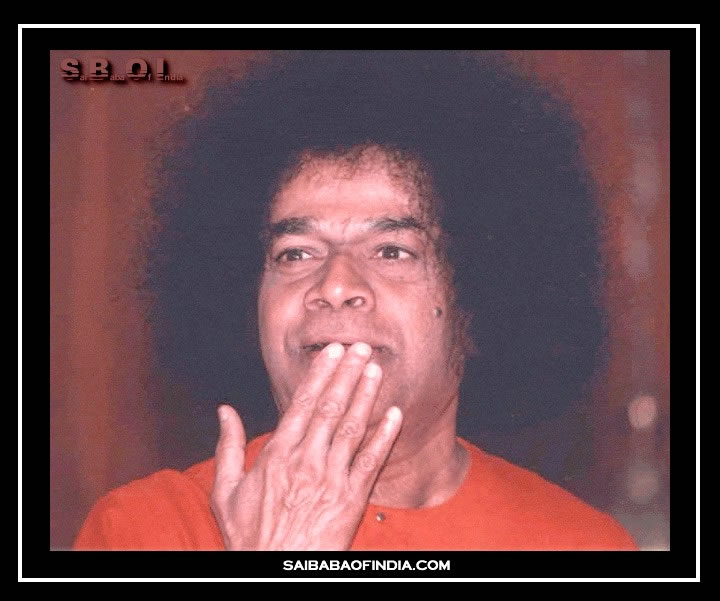


Mekata thama Kiyannay.....May Video ekkay kiuwa wagay ma, Indian Govenment ekka Sai Babata Support kiyala. May Tread eka patan gatha welaway ma, Indian News Site ekaka Meka Thibba, dan Payakata issella Add karapu News ekkak.
http://sify.com/news/manmohan-seeks-sai-baba-s-blessings-imagegallery-national-klwtWjefhdc.html
Wikipedia
http://en.wikipedia.org/wiki/Sathya_Sai_Baba
Criticism and controversy

The neutrality of this section is disputed. Please see the discussion on the talk page. Please do not remove this message until the dispute is resolved. (May 2009)
The Salon.com's "Untouchable" article, published in 25 July 2001, reported that after Conny Larsson, a Swedish film star, made abuse allegations, the Sai Organization in Sweden, along with a Sai-affiliated school, was shut down. It also carried other allegations.[98][99] The article stated that although controversies surround these ventures, even Sathya Sai Baba's critics admit that he has helped to ease the region's suffering. Illustrated Weekly of India stated that no one doubted the numerous philanthropic works conducted by the Sai organization regardless of the controversial divine status of Baba.[98]
In 2004, in the UK and internationally, the BBC aired a documentary titled The Secret Swami, in its series 'The World Uncovered'.[100] One central theme of the BBC documentary was Alaya Rahm's sexual abuse allegations against Sathya Sai Baba.[99] The documentary interviewed him together with Mark Roche, who had devoted 25 years of his life since 1969 to the movement and alleged abuse by him.[99] A spokesman for the BBC told Asian Voice that the documentary had gone to great lengths to be balanced and fair, and that the story was one of a crisis and ultimately a betrayal of faith.[101] Another documentary, Seduced By Sai Baba, carried interviews of abuse allegations. It was produced by Denmark's national television and radio broadcast company, Denmarks Radio (DR).
The Vancouver Sun in 2001 reported that Sathya Sai Baba told his adherents not to sign on to the World Wide Web due to the allegations rapidly circulating on various Internet sites and in a few newspapers.[102] In a 2000 public discourse, Sathya Sai Baba said, "These teachings (the Vedas) are highly sacred. Today people are ready to believe all that they see on television and internet but do not repose their faith in the Vedic declarations. Internet is like a waste paper basket. Follow the 'innernet,' not the internet."[103]
Documentaries produced by the BBC and the Danish Broadcasting Corporation, analyzing videos of the supposed miracles, suggest that they can be explained as sleight of hand.[99][104] In the 1995 TV documentary Guru Busters,[105] produced by filmmaker Robert Eagle for UK's Channel 4, Sathya Sai Baba was accused of faking his materializations. A videotape[106] suggested that magician's tricks were involved. The same videotape was mentioned in the Deccan Chronicle, on 23 November 1992, on a front page headline "DD Tape Unveils Baba Magic".[107] However Dr. Erlendur Haraldsson, Professor of Psychology in his book Modern Miracles stated that on investigating the DD video researchers did not find evidence of fake materialisation as claimed by Deccan chronicle. Dr. Wiseman took the video to a company which investigates coorperate fraud. In spite of improving the grainness of the low quality video with enhanced filters and running it through advanced image processing systems still the DD video did not yield firm evidence of sleight of hand.[108]
The British journalist Mick Brown stated in his 1998 book that Sathya Sai Baba's claim of "resurrecting" the American devotee Walter Cowan in 1971 was probably untrue.[109] His opinion was based on letters from the attending doctors presented in the magazine Indian Skeptic, published by Basava Premanand, a skeptic and amateur magician.[109][110] Mick Brown also related, in the same book, his experiences with manifestations of vibuthi from Sathya Sai Baba's pictures in houses in London, which he felt were not fraudulent or the result of trickery.[83] Brown wrote with regards to Sathya Sai Baba's claims of omniscience, that "skeptics have produced documentation clearly showing discrepancies between Baba's reading of historical events and biblical prophecies, and the established accounts."[109] In a BBC documentary Basava Premanand stated that he had been investigating Sathya Sai Baba since 1968, and that in his opinion Baba has faked materialisations. He sued Sathya Sai Baba in 1986 for violations of the Gold Control Act which stemmed from Sathya Sai Baba's purported "materializations" of gold objects. When the case was dismissed, Premanand unsuccessfully appealed on the ground that claimed spiritual power is not a defense recognized in law.[111]
The magazine India Today published in December 2000 a cover story about Baba with allegations of fakery made by the magician P. C. Sorcar, Jr..[112]
[edit] Responses to criticism
Neither Sathya Sai Baba nor any organizations associated with him have been charged or convicted for sexual abuse or any other crime in a court of law.[113] Alaya Rahm filed a lawsuit against the 'Sathya Sai Baba Society' in the Superior Court of California on January 6, 2005. On April 7, 2006 Alaya Rahm withdrew his lawsuit after indications that his challenge lacked merit. The case was dismissed 'with prejudice' meaning it cannot be filed for the same claims again.[113] The Pioneer also noted that no offers of monetary settlement were paid to Alaya Rahm.[113]
During an interview with Asian Voice magazine Ashok Bhagani, a trustee of the Sai Organization in the UK, said that the allegations in the Secret Swami BBC documentary were baseless. Bhagani said that devotees never meet Baba alone.[101]
Lawrence A. Babb states, "he is certainly more than the mere parlour trick magician many of his critics claim that he is."[9]
Devotee Bill Aitken (traveller) was quoted by The Week as saying that Sathya Sai Baba's reputation has not been harmed by the negative stories published about the guru. He opined that the more detractors rail against Sathya Sai Baba, the more new devotees went to see him.[114]
In the article Divine Downfall published in the Daily Telegraph Professor Anil Kumar, the ex-Principal of the Sathya Sai Educational Institute said that he believed that the controversy is part of Baba's divine plan and that every great religious teacher had to face criticism in his/her lifetime. Anil Kumar also said that allegations have been leveled at Sathya Sai Baba since childhood, but with every criticism he becomes more and more triumphant.[115]
In an official letter made public in December 2001, A.B. Vajpayee (then Prime Minister of India), P.N. Bhagawati (Former Chief Justice of the Supreme Court of India), Ranganath Misra (Chair Person, National Human Rights Commissioner of India and Former Chief Justice of the Supreme Court of India), Najma Heptulla (President of the Inter-Parliamentary Union; UNDP Distinguished Human Development Ambassador) and Shivraj Patil (Member of Parliament, India; Formerly of the Lok Sabha & Union Minister) all signed a letter which stated as follows "We are deeply pained and anguished by the wild, reckless and concocted allegations made by certain vested interests and people against Bhagawan Sri Sathya Sai Baba. We would normally expect that responsible media would ascertain the true facts before printing such calumny - especially when the person is revered globally as an embodiment of love and selfless service to humanity. Since this professional ethic has not been observed by a section of the media, we have elected to go public with this signed statement."[116]
The Times Of India on 26 December 2000 said that Sathya Sai Baba "lashed out at his detractors in a rare display of anger" while referring to criticism published in a magazine. The Times quoted him as saying, "Jesus Christ underwent many hardships, and was put to the cross because of jealousy. Many around him could not bear the good work he did and the large number of followers he gathered. One of his disciples, Judas, betrayed him. In those days there was one Judas, but today there are thousands. Just as that Judas was tempted to betray Jesus, the Judases of today, too, are bought out to lie. Jealousy was the motive behind the allegations levelled at him".[117]
Sathya Sai Baba publicly responded to the allegations on 25 December 2000: "Some people out of their mean-mindedness are trying to tarnish the image of Sai Baba. I am not after name and fame. So, I do not lose anything by their false allegations. My glory will go on increasing day by day. It will never diminish even a bit if they were to publicize their false allegations in the whole world in bold letters. Some devotees seem to be perturbed over these false statements. They are not true devotees at all. Having known the mighty power of Sai, why should they be afraid of the 'cawing of crows'? One should not get carried away by all that is written on walls, said in political meetings or the vulgar tales carried by the print media."[118]
[edit] See also
http://en.wikipedia.org/wiki/Sathya_Sai_Baba
Criticism and controversy

The neutrality of this section is disputed. Please see the discussion on the talk page. Please do not remove this message until the dispute is resolved. (May 2009)
The Salon.com's "Untouchable" article, published in 25 July 2001, reported that after Conny Larsson, a Swedish film star, made abuse allegations, the Sai Organization in Sweden, along with a Sai-affiliated school, was shut down. It also carried other allegations.[98][99] The article stated that although controversies surround these ventures, even Sathya Sai Baba's critics admit that he has helped to ease the region's suffering. Illustrated Weekly of India stated that no one doubted the numerous philanthropic works conducted by the Sai organization regardless of the controversial divine status of Baba.[98]
In 2004, in the UK and internationally, the BBC aired a documentary titled The Secret Swami, in its series 'The World Uncovered'.[100] One central theme of the BBC documentary was Alaya Rahm's sexual abuse allegations against Sathya Sai Baba.[99] The documentary interviewed him together with Mark Roche, who had devoted 25 years of his life since 1969 to the movement and alleged abuse by him.[99] A spokesman for the BBC told Asian Voice that the documentary had gone to great lengths to be balanced and fair, and that the story was one of a crisis and ultimately a betrayal of faith.[101] Another documentary, Seduced By Sai Baba, carried interviews of abuse allegations. It was produced by Denmark's national television and radio broadcast company, Denmarks Radio (DR).
The Vancouver Sun in 2001 reported that Sathya Sai Baba told his adherents not to sign on to the World Wide Web due to the allegations rapidly circulating on various Internet sites and in a few newspapers.[102] In a 2000 public discourse, Sathya Sai Baba said, "These teachings (the Vedas) are highly sacred. Today people are ready to believe all that they see on television and internet but do not repose their faith in the Vedic declarations. Internet is like a waste paper basket. Follow the 'innernet,' not the internet."[103]
Documentaries produced by the BBC and the Danish Broadcasting Corporation, analyzing videos of the supposed miracles, suggest that they can be explained as sleight of hand.[99][104] In the 1995 TV documentary Guru Busters,[105] produced by filmmaker Robert Eagle for UK's Channel 4, Sathya Sai Baba was accused of faking his materializations. A videotape[106] suggested that magician's tricks were involved. The same videotape was mentioned in the Deccan Chronicle, on 23 November 1992, on a front page headline "DD Tape Unveils Baba Magic".[107] However Dr. Erlendur Haraldsson, Professor of Psychology in his book Modern Miracles stated that on investigating the DD video researchers did not find evidence of fake materialisation as claimed by Deccan chronicle. Dr. Wiseman took the video to a company which investigates coorperate fraud. In spite of improving the grainness of the low quality video with enhanced filters and running it through advanced image processing systems still the DD video did not yield firm evidence of sleight of hand.[108]
The British journalist Mick Brown stated in his 1998 book that Sathya Sai Baba's claim of "resurrecting" the American devotee Walter Cowan in 1971 was probably untrue.[109] His opinion was based on letters from the attending doctors presented in the magazine Indian Skeptic, published by Basava Premanand, a skeptic and amateur magician.[109][110] Mick Brown also related, in the same book, his experiences with manifestations of vibuthi from Sathya Sai Baba's pictures in houses in London, which he felt were not fraudulent or the result of trickery.[83] Brown wrote with regards to Sathya Sai Baba's claims of omniscience, that "skeptics have produced documentation clearly showing discrepancies between Baba's reading of historical events and biblical prophecies, and the established accounts."[109] In a BBC documentary Basava Premanand stated that he had been investigating Sathya Sai Baba since 1968, and that in his opinion Baba has faked materialisations. He sued Sathya Sai Baba in 1986 for violations of the Gold Control Act which stemmed from Sathya Sai Baba's purported "materializations" of gold objects. When the case was dismissed, Premanand unsuccessfully appealed on the ground that claimed spiritual power is not a defense recognized in law.[111]
The magazine India Today published in December 2000 a cover story about Baba with allegations of fakery made by the magician P. C. Sorcar, Jr..[112]
[edit] Responses to criticism
Neither Sathya Sai Baba nor any organizations associated with him have been charged or convicted for sexual abuse or any other crime in a court of law.[113] Alaya Rahm filed a lawsuit against the 'Sathya Sai Baba Society' in the Superior Court of California on January 6, 2005. On April 7, 2006 Alaya Rahm withdrew his lawsuit after indications that his challenge lacked merit. The case was dismissed 'with prejudice' meaning it cannot be filed for the same claims again.[113] The Pioneer also noted that no offers of monetary settlement were paid to Alaya Rahm.[113]
During an interview with Asian Voice magazine Ashok Bhagani, a trustee of the Sai Organization in the UK, said that the allegations in the Secret Swami BBC documentary were baseless. Bhagani said that devotees never meet Baba alone.[101]
Lawrence A. Babb states, "he is certainly more than the mere parlour trick magician many of his critics claim that he is."[9]
Devotee Bill Aitken (traveller) was quoted by The Week as saying that Sathya Sai Baba's reputation has not been harmed by the negative stories published about the guru. He opined that the more detractors rail against Sathya Sai Baba, the more new devotees went to see him.[114]
In the article Divine Downfall published in the Daily Telegraph Professor Anil Kumar, the ex-Principal of the Sathya Sai Educational Institute said that he believed that the controversy is part of Baba's divine plan and that every great religious teacher had to face criticism in his/her lifetime. Anil Kumar also said that allegations have been leveled at Sathya Sai Baba since childhood, but with every criticism he becomes more and more triumphant.[115]
In an official letter made public in December 2001, A.B. Vajpayee (then Prime Minister of India), P.N. Bhagawati (Former Chief Justice of the Supreme Court of India), Ranganath Misra (Chair Person, National Human Rights Commissioner of India and Former Chief Justice of the Supreme Court of India), Najma Heptulla (President of the Inter-Parliamentary Union; UNDP Distinguished Human Development Ambassador) and Shivraj Patil (Member of Parliament, India; Formerly of the Lok Sabha & Union Minister) all signed a letter which stated as follows "We are deeply pained and anguished by the wild, reckless and concocted allegations made by certain vested interests and people against Bhagawan Sri Sathya Sai Baba. We would normally expect that responsible media would ascertain the true facts before printing such calumny - especially when the person is revered globally as an embodiment of love and selfless service to humanity. Since this professional ethic has not been observed by a section of the media, we have elected to go public with this signed statement."[116]
The Times Of India on 26 December 2000 said that Sathya Sai Baba "lashed out at his detractors in a rare display of anger" while referring to criticism published in a magazine. The Times quoted him as saying, "Jesus Christ underwent many hardships, and was put to the cross because of jealousy. Many around him could not bear the good work he did and the large number of followers he gathered. One of his disciples, Judas, betrayed him. In those days there was one Judas, but today there are thousands. Just as that Judas was tempted to betray Jesus, the Judases of today, too, are bought out to lie. Jealousy was the motive behind the allegations levelled at him".[117]
Sathya Sai Baba publicly responded to the allegations on 25 December 2000: "Some people out of their mean-mindedness are trying to tarnish the image of Sai Baba. I am not after name and fame. So, I do not lose anything by their false allegations. My glory will go on increasing day by day. It will never diminish even a bit if they were to publicize their false allegations in the whole world in bold letters. Some devotees seem to be perturbed over these false statements. They are not true devotees at all. Having known the mighty power of Sai, why should they be afraid of the 'cawing of crows'? One should not get carried away by all that is written on walls, said in political meetings or the vulgar tales carried by the print media."[118]
[edit] See also


Similar threads

- Replies
- 9
- Views
- 747

- Replies
- 10
- Views
- 520


- Replies
- 18
- Views
- 2K
