

Latest ads
-
 Premium Land with House for Sale
- anil1961
- Updated:
-
 AWS Certified Solutions Architect-Associate + AWS Certified Cloud Practitioner
- Sanjeewani95
- Updated:
-
 🚀 එක පැකේජ් එකයි - මාසෙටම Unlimited Internet! 🌐
- sayuru bandara
- Updated:
-
 🎬 CapCut Pro 1 Month Access! LKR 600
- sayuru bandara
- Updated:
-
 🚀 Google One AI PRO Plan (Gemini Pro Activation) – 18 Months Access! LKR 2200
- sayuru bandara
- Updated:
You are using an out of date browser. It may not display this or other websites correctly.
You should upgrade or use an alternative browser.
You should upgrade or use an alternative browser.


toyota armada nemei Nissan armada neda ban..?
eka wadak na...!!
Ela Post eka machan...!!
ow macho waradimak .
toyota thundra
nisaan armada
onna haduwa

thama dakala wath ahala wath na ban. wadima theyanne 2stroke.5or6 cilynder. 4 stroke awath theyanawa. habai adui...
kohoma unath ela post....rep balu, wate gehin ennalu
ඔනේ තරම් සිලින්ඩර් 18 එන්ජින් තියෙනවා
1.
W18 engine
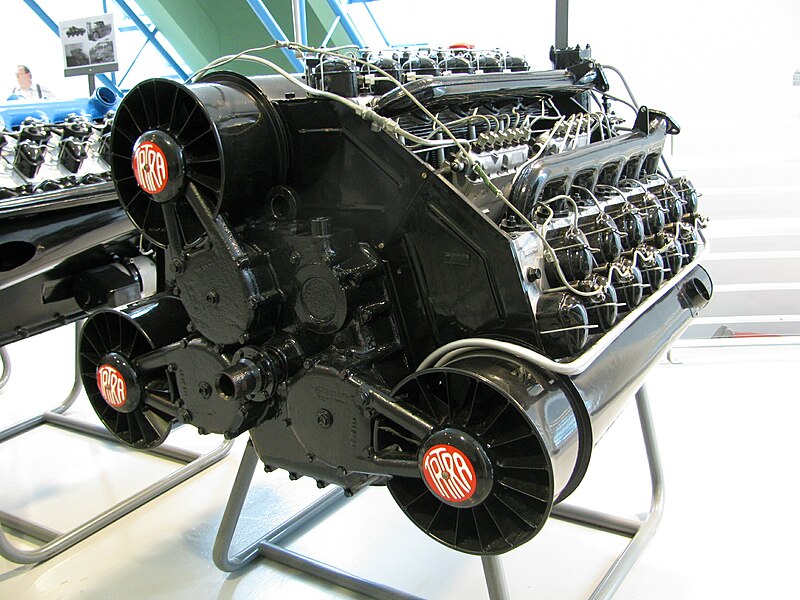
Tatra T955, aircooled W18 engine from 1943.
A W18 engine is an eighteen cylinder piston engine which usually has a single crankshaft with three banks of six cylinders arranged in an inverted broad arrow configuration.
An early example is the Isotta Fraschini Asso 750 used to power the Italian Savoia-Marchetti S.55 seaplanes flown by Italo Balbo into Chicago in 1933. This engine used the same layout as the above-mentioned Bugatti - basically a vertical six with two adjacent banks set at 60° each to make a W-18.
In 1967, Scuderia Ferrari engineer Franco Rocchi built an experimental 65×50mm, 498 cc W3 engine, effectively a single crankpin module, in order to assess the potential for a 3-litre W18 Formula 1 engine.[1] Although the engine developed 80 bhp at 11,000 rpm and 160 bhp per litre, the idea was abandoned. Subsequently in 1972 Formula 1 rules were changed to outlaw the use of engines with more than 12 cylinders. Rocchi used this module as the basis for a 3½ litre W12 engine for Life Racing Engines in 1988, although this was infamously unsuccessful.[1]
Recent W18 engines powered the Bugatti EB 118, Bugatti EB 218 and Bugatti 18/3 Chiron concept cars in the late 1990s. This engine featured three banks of six cylinders set 60° apart. The W18 engine was abandoned due to shifting problems.
The variation developed by Volkswagen retained the 18 cylinders but instead of three cylinder banks, it had four. This confused many who saw the specification in print at motor shows since 18 isn't evenly divisible by four. The design was loosely based on the concept Volkswagen used for its V5 engines which had one bank with three cylinders and one bank with only two. Essentially the four-bank W18 was two V9 engines (one bank of five cylinders and one bank of four) mated to a common crankshaft. Ultimately the design proved to be impractical.
2.
3.

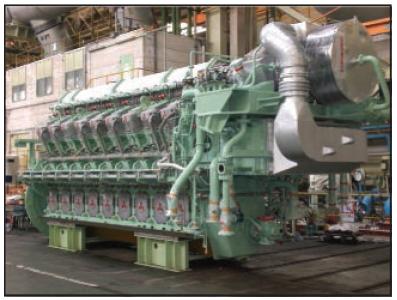
Engines come in all varieties and model engines are no exception. Some model engine builders are willing to take on bigger challenges when choosing a prototype to model and Clen Tomlinson went all out with this 18 cylinder 2 stroke engine.
You have to look closely to see what this engine really is. The engine consists of three banks of six cylinders connected together in a triangular configuration. Each cylinder has two opposed pistons connected to a crankshaft at either end. That means three crankshafts and 36 pistons! The full size prototype was a diesel but this model was built as a spark ignition engine. Because it’s a two stroke, the intake and exhaust ports are in the cylinder walls and opened and closed by the pistons as they pass by.
The engine is supercharged by a blower mounted at the rear of the engine and driven at six times crankshaft rpm.
Clen Tomlinson, at the time of the article, was 71 years old and was an electro mechanical engineer who worked with paper and pencil and sliderules but taught himself to use AutoCAD 2000 and also to use CNC machinery to help produce this little marvel. It’s not quite done but looks absolutely stunning. He lives in England but is a member of BAEM, the Bay Area Engine Modelers club of San Francisco, CA.
It’s amazing what these guys do and Clen has raised the bar for what’s possible. Very, very nice.


Ratharan ubanam Perapu ratharan..
Math Bike gana igana ganna Assawen hitiye..Sinhalenma thiyena nisa lestam thereanawa
Thankyou soo much Raththaran..Digatama liyapan
Rep+++++++++++++++++
Math Bike gana igana ganna Assawen hitiye..Sinhalenma thiyena nisa lestam thereanawa
Thankyou soo much Raththaran..Digatama liyapan
Rep+++++++++++++++++


